The October 2026 colour calendar, wearable ideas for women and men, and a practical way to dress for Garba, puja, work and family evenings without buying nine complete outfits.
Full sizeNine Nights, One Working WardrobeLet familiar clothes do more.
Navratri outfit ideas for 2026, from the first puja to the last Garba round
Nine colours on a calendar can make a perfectly useful wardrobe look incomplete. You own a white kurta, a skirt that moves beautifully and a saree you would like to wear again. Then purple arrives on the list, and suddenly you are shopping for an outfit you had no other reason to buy.
Start by giving the colour a smaller job.
The whole guide, in one line
It can live in a blouse, a dupatta, a jacket or a pair of earrings. The rest of the outfit needs to work for the evening you have actually planned: dancing on an outdoor ground, sitting for a family puja, attending an office celebration or meeting friends after dinner.
This guide follows Sharad Navratri in October 2026. It brings the colour calendar together with specific outfit ideas, a movement check and a repeat-wear plan. All outfit formulas and visual combinations are Mundial Image editorial recommendations. They are not religious requirements.
01The short answer
What are the nine Navratri colours in 2026?
The October 2026 sequence
For Sharad Navratri, 11 to 19 October 2026, the sequence published by Drik Panchang is orange, white, red, royal blue, yellow, green, grey, purple and peacock green. The cited Gujarat calendar places Vijayadashami on 20 October; regional observances can differ. Do not use the March Chaitra Navratri colour calendar for this October guide.[1][2]
Source: Drik Panchang, checked 4 October 2026. Colour dressing is especially popular in Gujarat and Maharashtra. Swatches are editorial approximations, not textile standards.
Follow your local ritual calendar.
A dressing calendar has limits. Day-wise colour dressing is particularly popular in Gujarat and Maharashtra; it is not a universal dress code for everyone celebrating Navratri. Follow your household, temple and event customs. Ritual dates and timings depend on the local panchang, so a colour row should not be treated as an Ashtami or Navami instruction.[1][2]
Before choosing a Navratri outfit, decide where it has to work
A royal-blue cotton kurta and a royal-blue sequinned blouse share a colour. They behave differently under office lighting, in a crowded dance circle and while sitting on the floor.
Choose the occasion and movement first. Then choose a silhouette with enough room for that activity. Feel the garment with its lining: a light-looking skirt can carry a heavy underskirt, and a soft blouse can have scratchy embroidery at the armhole. Add the day's colour where it makes sense. Decide on surface detail and jewellery last.
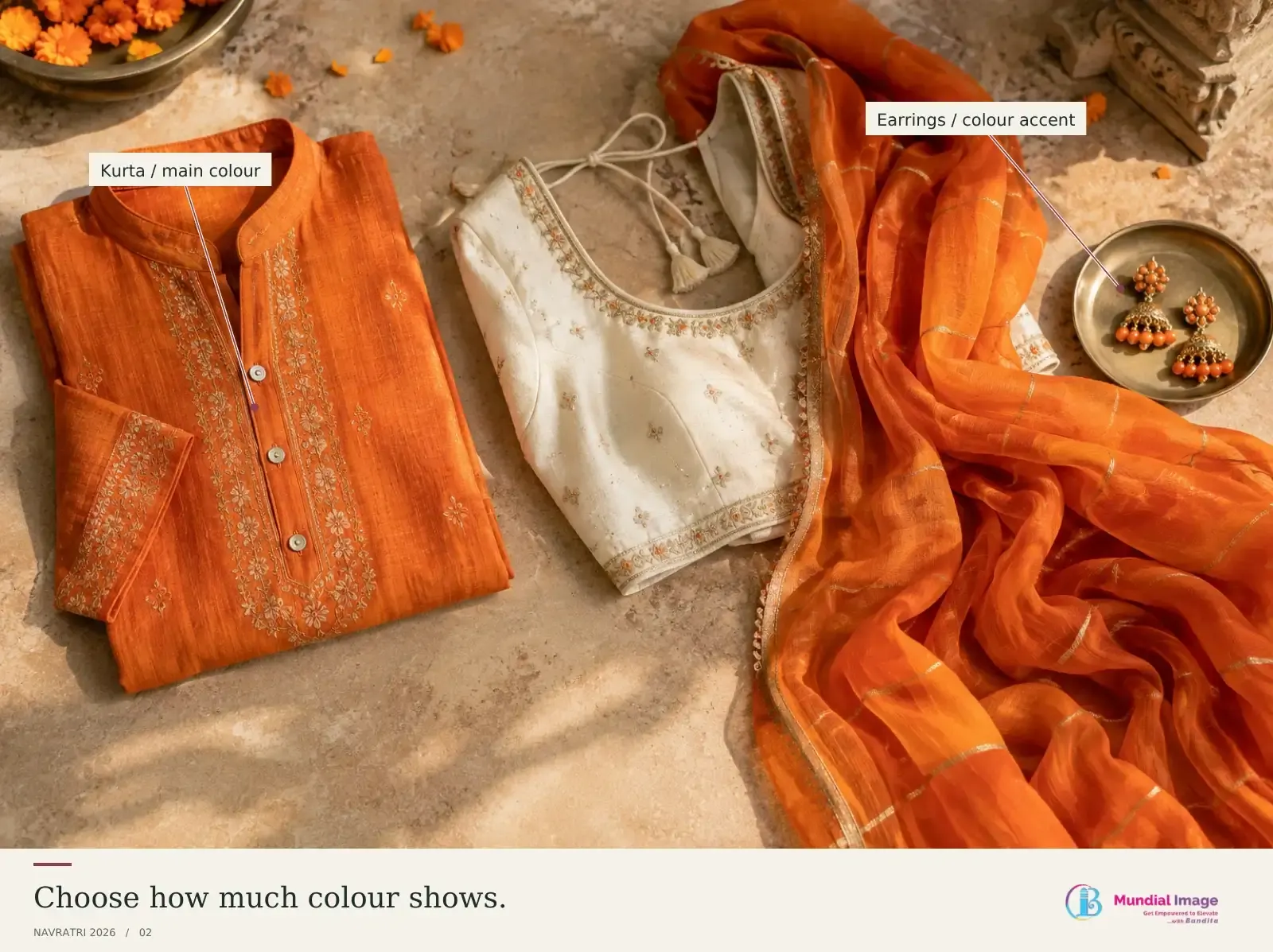
The amount of colour changes the result. A full orange outfit makes colour the main subject. An orange dupatta interrupts an otherwise quiet look. An orange hair accessory is a small reference. None needs to be presented as the only correct interpretation.
Full sizeOne Colour at Different ScalesChoose how much colour shows.
Garba has a devotional and community setting in Gujarat. UNESCO describes the dance's circular movement and gradually increasing tempo; a styling guide should respect both its setting and its physical demands. Dandiya events add arm movement and sticks to the practical brief.[3]
Start with the actual evening
The order of decisions changes the outfit.
1Requirements
Read the rules first
Venue rules, household custom and work policy.
2Activity
Name what you will do
Dancing, sitting, hosting or commuting?
3Base
Pick the silhouette
Choose a silhouette that fits the activity.
4Colour
Give the colour its place
Garment, layer or small accent.
5Finish
Finish and test together
Jewellery, hair, shoes. Test them together.
Mundial Image styling recommendation. Event and household requirements take priority. Choose the colour after the brief.
03Nine nights
Nine-day Navratri outfit ideas for women and men
Each night carries two pairing notes. Use them as starting combinations: the actual cloth, light and proportion will change the result. These pairings carry no religious meaning.
01Sunday · 11 OctoberOrange
Pairs withCreamDeep plum
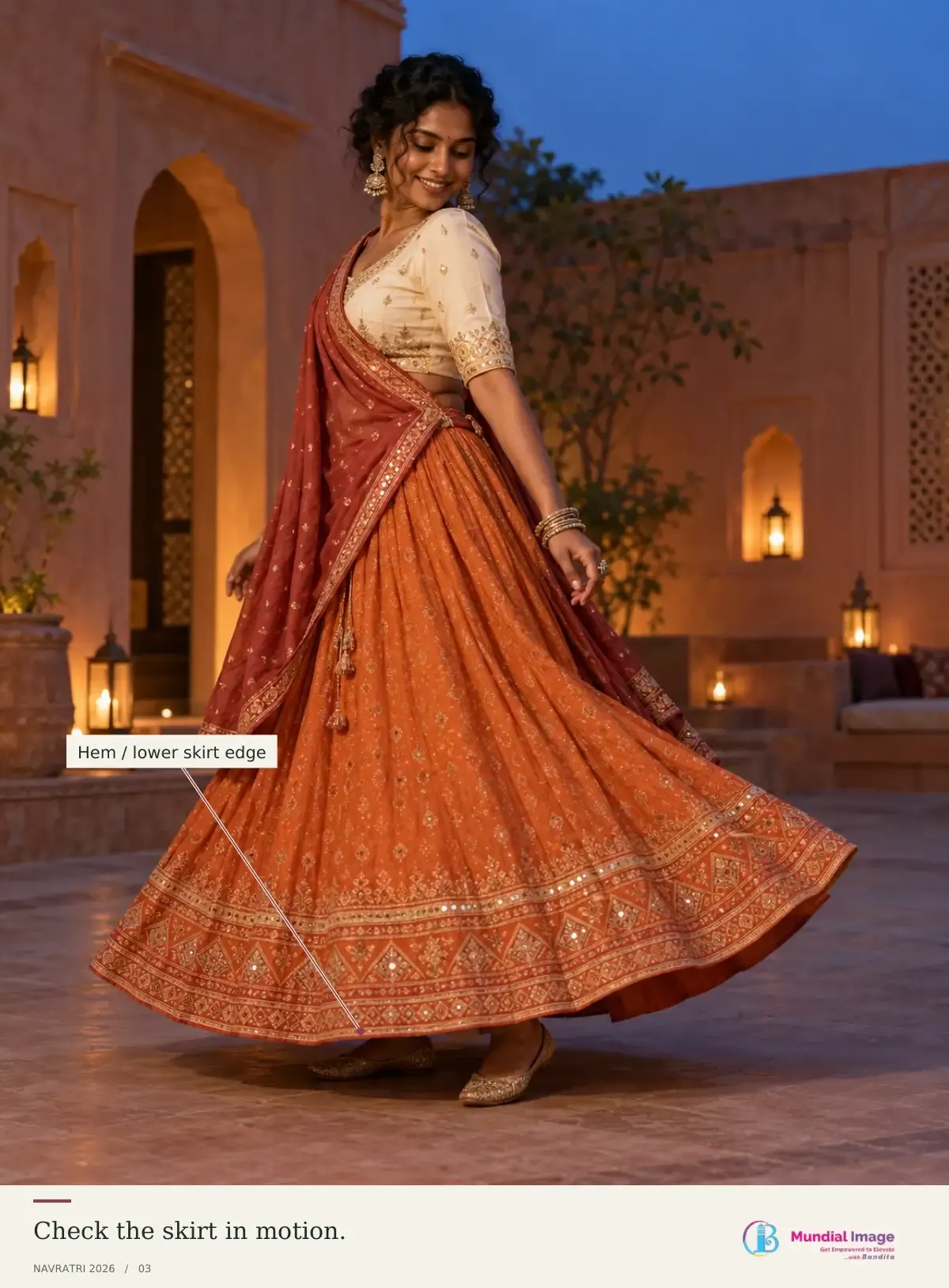
Day 1, orange: use the piece with the best movement
Begin with the skirt you already enjoy wearing. An orange cotton chaniya with a cream blouse can carry plenty of colour without dense embellishment across every surface. Secure the dupatta in a drape you have rehearsed; leave room for both arms to rise. Small earrings keep the attention on the skirt's movement.
For a quieter first day, an orange kurta with ecru trousers works for a daytime gathering. Check transparency in daylight before choosing the underlayer. A rust or terracotta accessory is a softer editorial interpretation if a vivid orange near the face feels unfamiliar.
Men can use an orange kurta with an existing cream bottom, or a woven orange waistcoat over a neutral base. Try sitting and reaching while the waistcoat is fastened. A garment that fits while standing can pull sharply across the chest during dancing. Save a substantial jacket for an evening with less activity.
Full sizeOrange in MotionCheck the skirt in motion.
02Monday · 12 OctoberWhite
Pairs withIndigoWarm metal
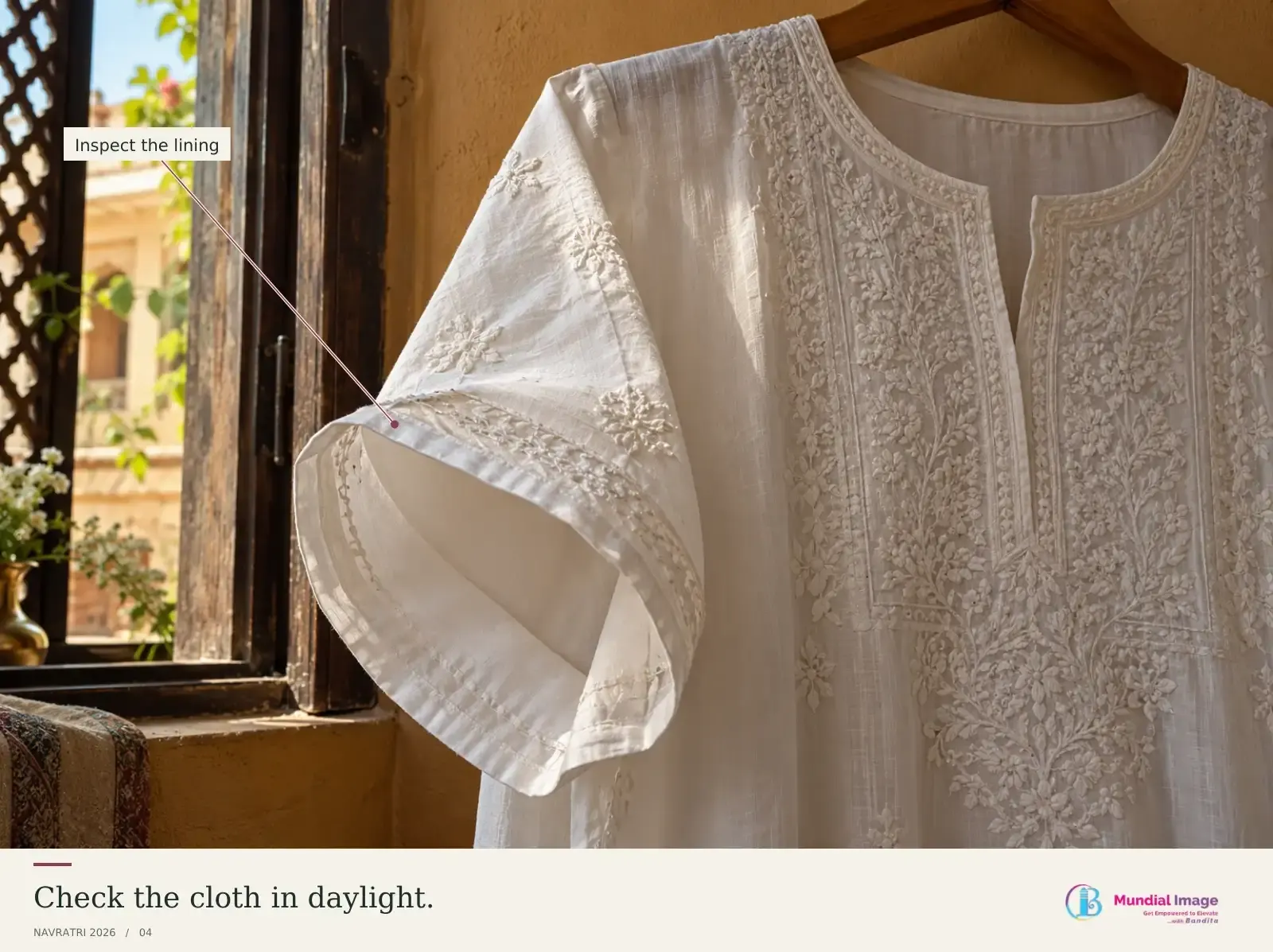
Day 2, white: inspect the fabric before adding anything
White makes small finishing details visible. Look at the lining, innerwear, seams and the condition of the hem. Take a phone photograph in daylight and indoors; the aim is to check the actual garment, not to judge your body.
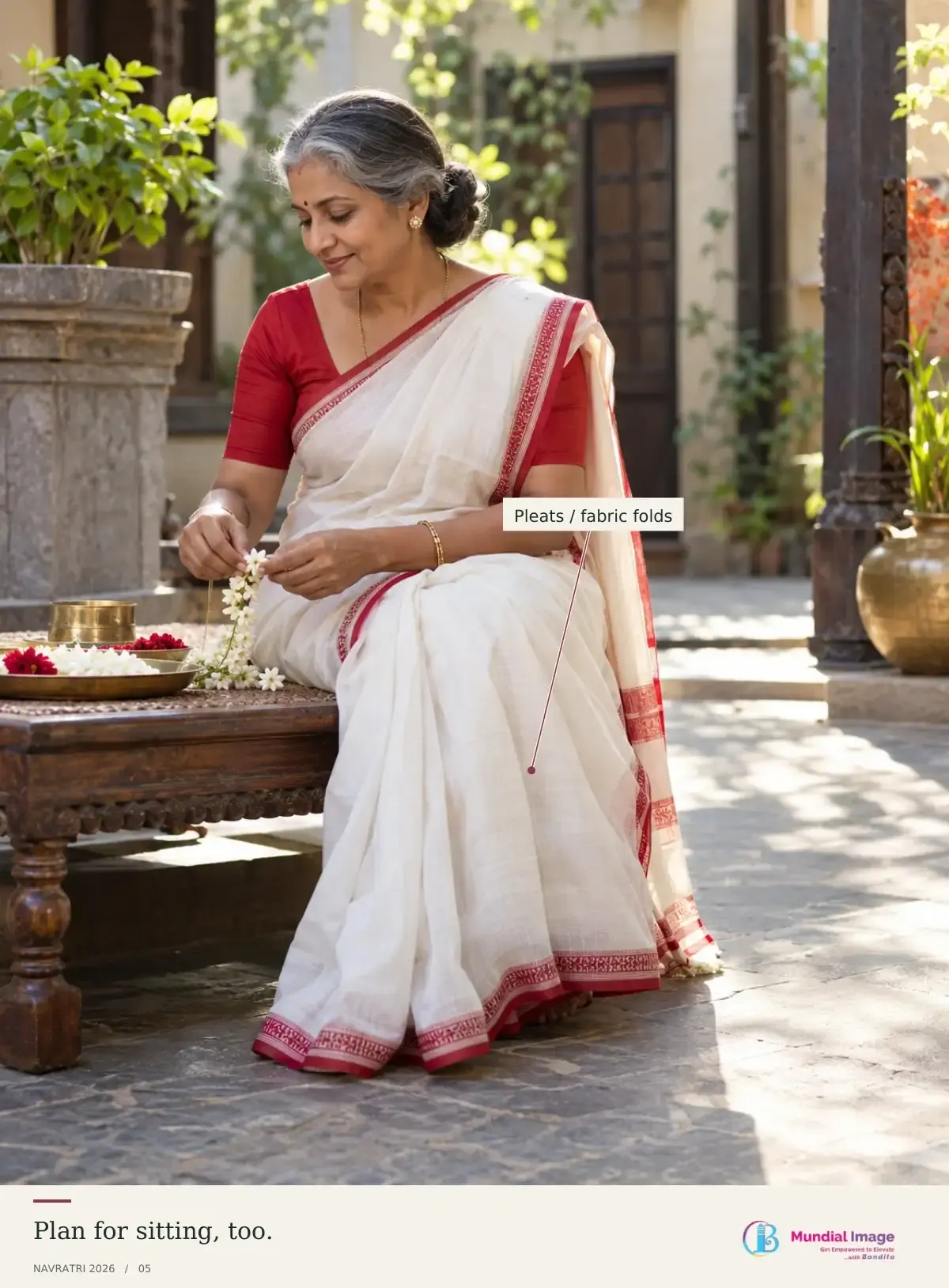
A white saree with a narrow coloured border can be enough for a family puja. Wear a blouse that stays comfortable when seated, and arrange the pallu away from anything you will be handling. For Garba, a white skirt with an embroidered blouse gives texture a larger role. The skirt needs a separate movement check even if you have worn it comfortably to dinner.
An off-white kurta and trousers make a useful men's base. Add a small embroidered jacket for photographs or a family visit, then remove it if the room gets warm. White-day jewellery can be silver-tone, gold-tone or colourful. Match its visual weight to the cloth rather than following a mandatory metal rule.
Full sizeWhite Fabric, Daylight CheckCheck the cloth in daylight.Full sizeA White Puja SareePlan for sitting, too.
03Tuesday · 13 OctoberRed
Pairs withCreamNavy
Day 3, red: choose how much attention you want it to hold
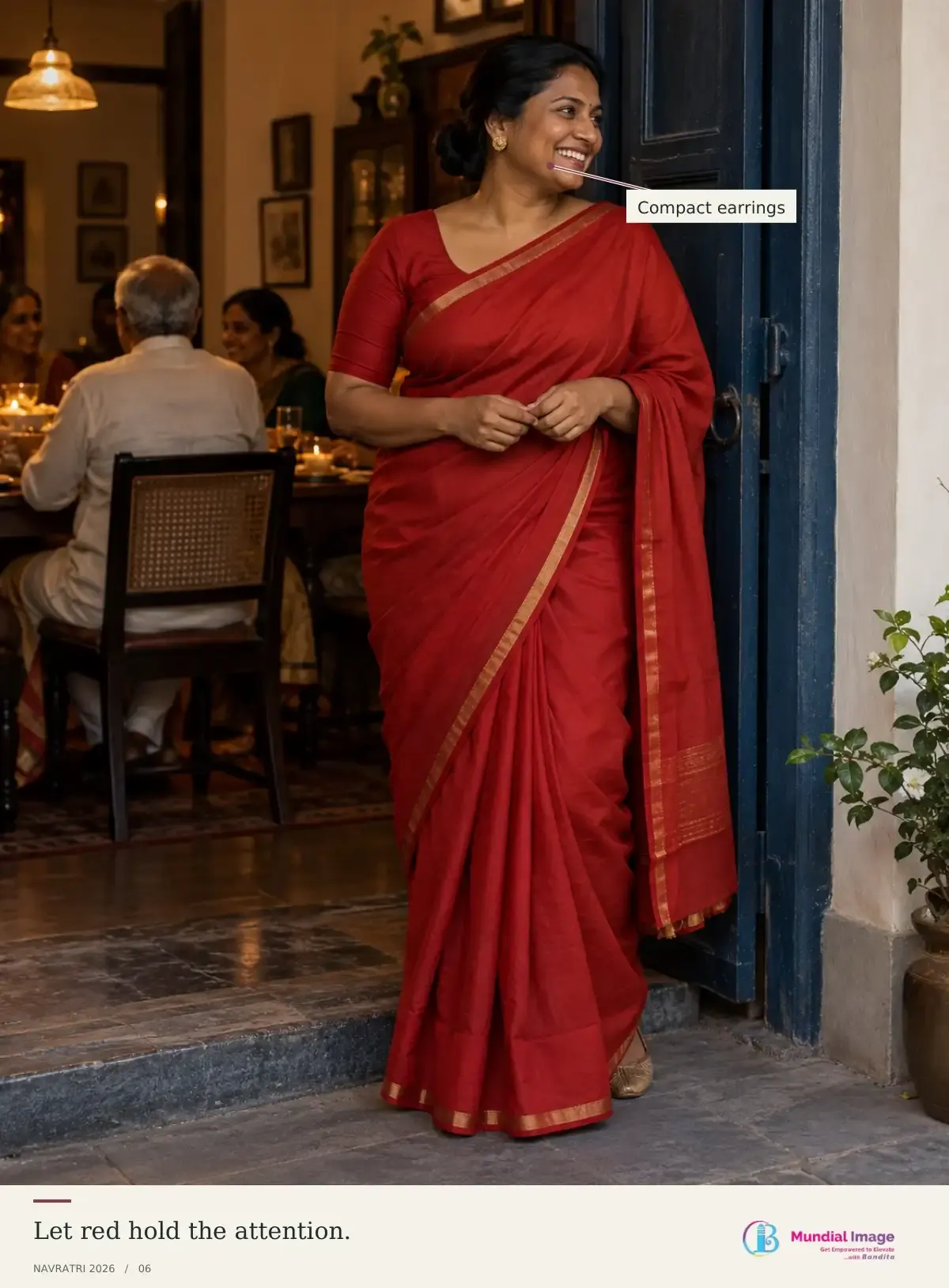
A red saree already gives the eye a clear place to land. For an evening at home, use a familiar blouse, compact earrings and a low bun. A bright lip can repeat the red, but it is optional; a softer lip leaves the fabric in charge.
For dancing, move the colour into an existing red dupatta over a neutral skirt and a securely fitted top. Check that the drape does not cover your hands or cross your sightline as you turn. If the dupatta needs constant rescuing, change the fastening or remove that layer.
Men who rarely wear red can begin with a red cotton kurta and plain bottoms. A red stole over a white kurta is an alternative for a family gathering, provided the loose ends stay out of the way. A pocket square works only if there is an actual pocket and the event warrants a jacket. There is no need to construct a formal outfit around one small colour accent.
Full sizeRed as the Main SubjectLet red hold the attention.
04Wednesday · 14 OctoberRoyal blue
Pairs withStoneSilver tone
Day 4, royal blue: plan for the workday as well as the evening
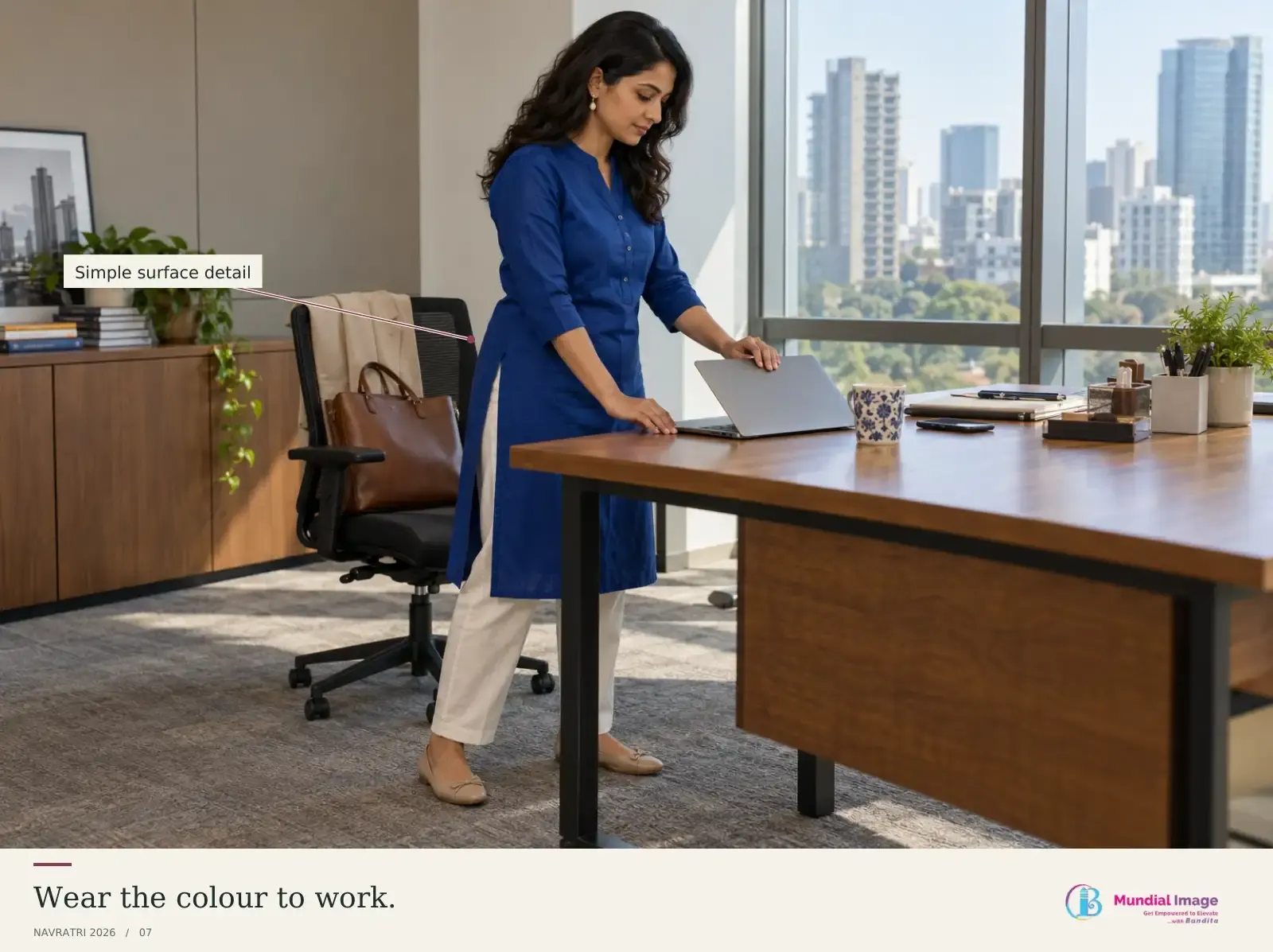
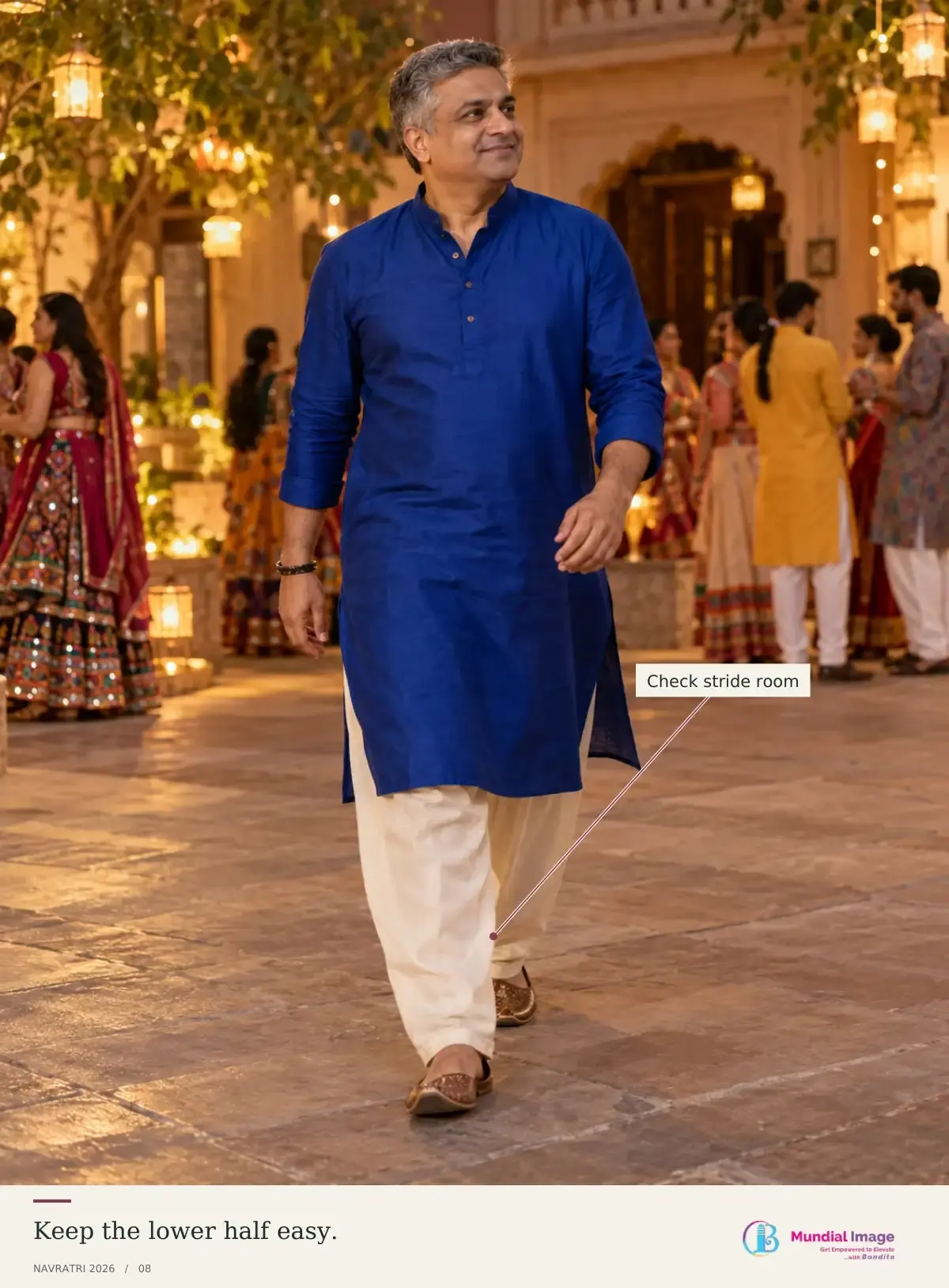
A royal-blue straight kurta and trousers can travel from a normal workday to a small festive gathering. During work, keep earrings compact and footwear appropriate to the workplace. Afterward, add an embroidered layer or a contrasting dupatta, put away the laptop bag and retest the outfit with the evening's shoes.
If the night involves sustained Garba, a fresh top may be more useful than more jewellery. Pack one if the commute or workday is likely to leave the original uncomfortable. The colour does not have to remain in the same garment all day.
A blue shirt with grey trousers is a restrained men's office option where the dress code allows it. For the event, switch to a blue kurta with roomy trousers, or keep the shirt and add one festive textile detail if that fits the invitation. Wear navy if that is what you own, while recognising it as an approximation rather than calling it royal blue.
Full sizeRoyal Blue at WorkWear the colour to work.Full sizeA Blue Kurta for the EveningKeep the lower half easy.
05Thursday · 15 OctoberYellow
Pairs withCreamCharcoal
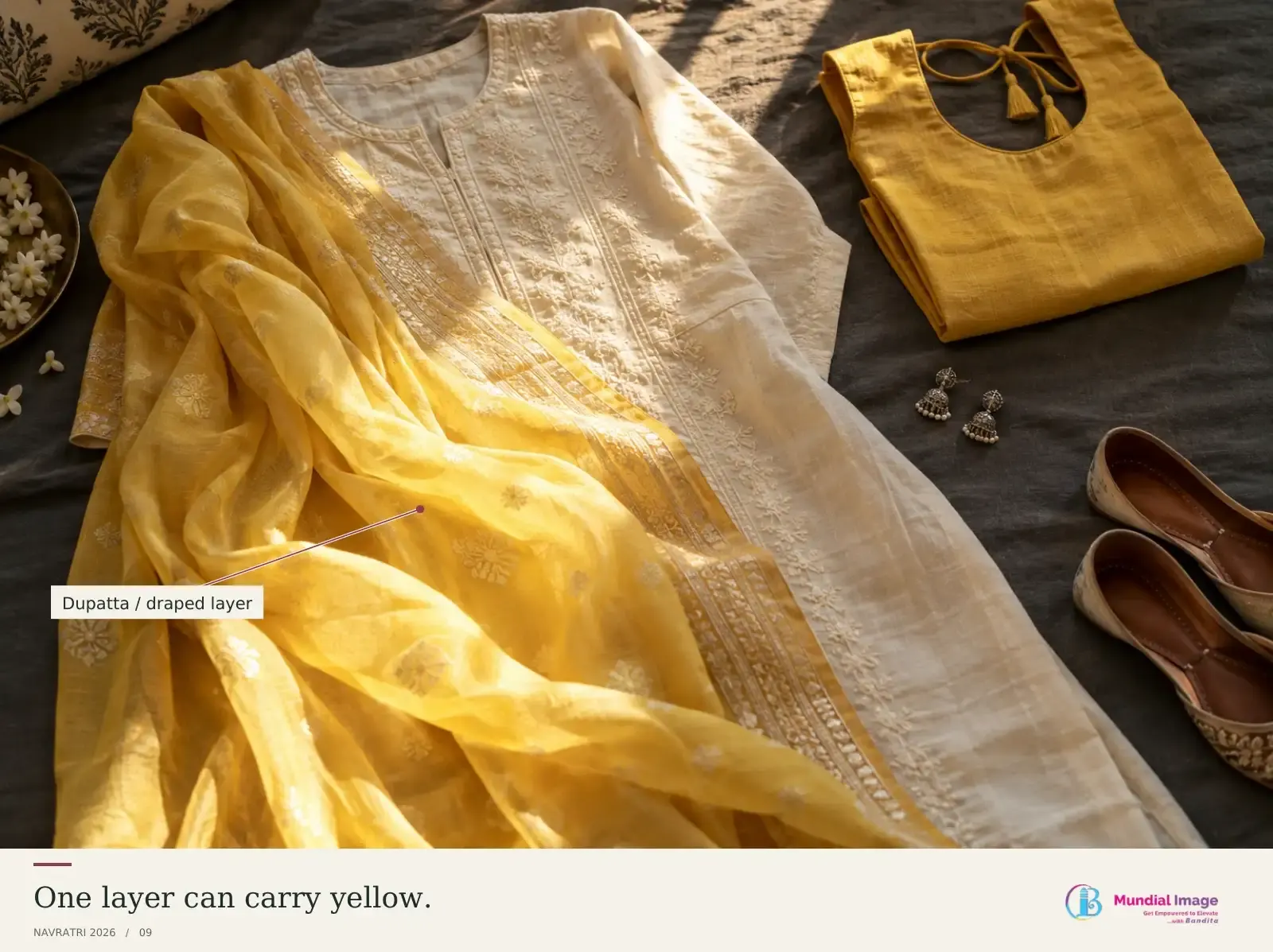
Day 5, yellow: borrow colour from a smaller piece
Yellow is a useful day to test the wardrobe before the shopping basket. A yellow blouse, dupatta or scarf can make a familiar white base feel different. If the only yellow piece is delicate, use it for a seated celebration rather than forcing it through a dance session.
For puja, try a yellow cotton saree with a narrow border and earrings that leave the neckline clear. For an informal social evening, a yellow top with a long skirt provides another use for an existing separate. Check where the top finishes when you lift your arms; a comfortable overlap at rest can disappear in motion.
Men can repeat cream trousers under a yellow kurta or wear a yellow waistcoat over a breathable neutral shirt for a gathering. Mustard gives a deeper, quieter version of yellow. Choose based on the clothes available and the look you prefer, without treating skin tone as a list of forbidden colours.
Full sizeThe Yellow Colour CarrierOne layer can carry yellow.
06Friday · 16 OctoberGreen
Pairs withIvoryMuted rose
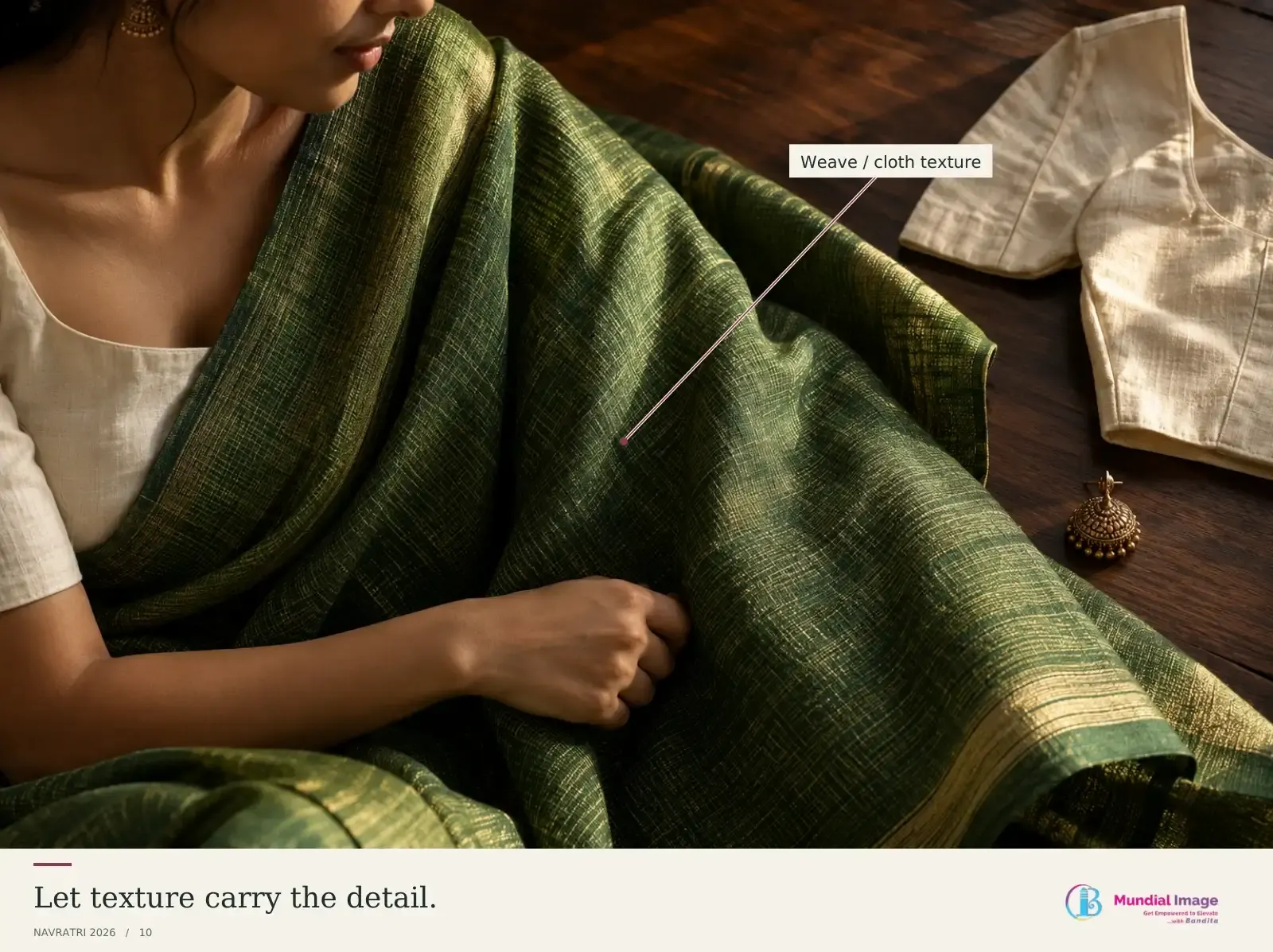
Day 6, green: let texture separate the looks
Green can become quite different outfits through surface and proportion. A matte green kurta with straight trousers is a useful daytime choice. A green blouse against a woven saree brings the colour close to the face. An emerald skirt with restrained mirror details creates more evening presence.
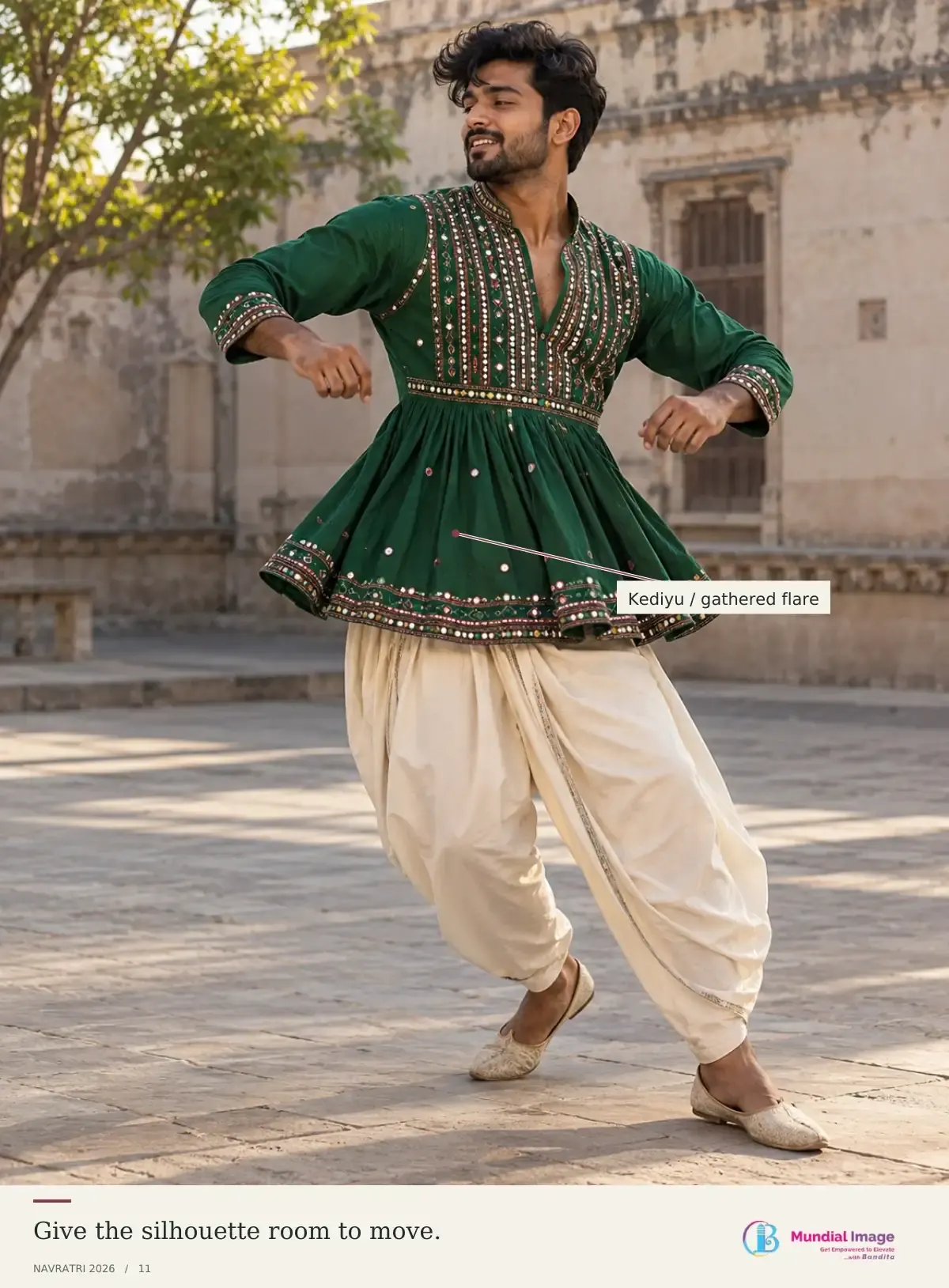
For men, a green kediyu with appropriate traditional bottoms is an option for a Gujarati Garba setting. A kurta with a short jacket is easier to assemble from many existing wardrobes. Check the jacket's armholes and the bottom's stride room together. A comfortable top cannot compensate for trousers that restrict a side step.
If you use a richly patterned textile, learn its actual name from the maker or label. A printed pattern that resembles bandhani or patola should be described as inspired by it unless the process and provenance are known. The same care applies to jewellery sold under heritage labels.
Full sizeGreen Through Woven TextureLet texture carry the detail.Full sizeMen's Green Garba SilhouetteGive the silhouette room to move.
07Saturday · 17 OctoberGrey
Pairs withMagentaCream
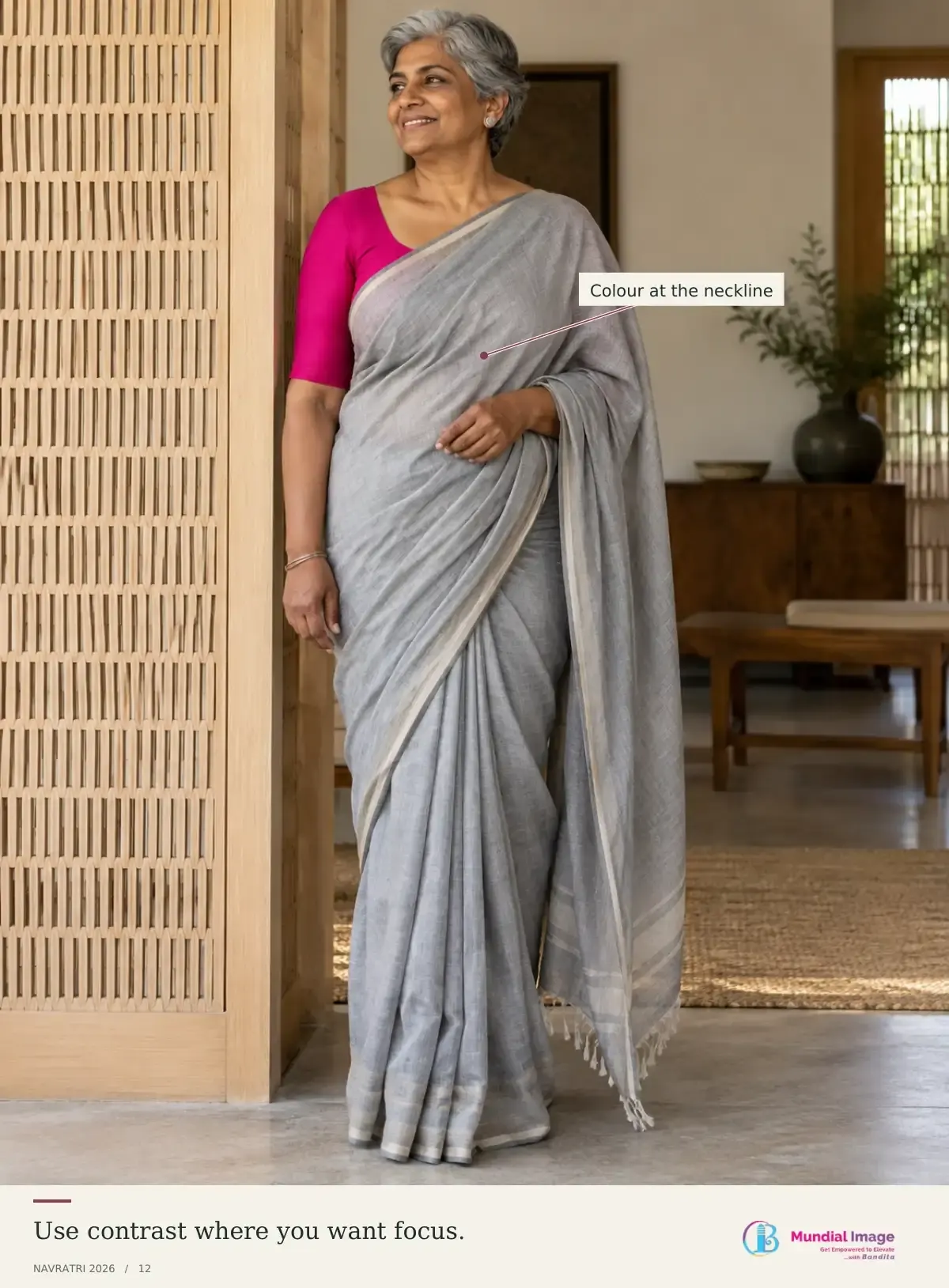
Day 7, grey: create distinction with contrast
Grey does not need rescuing with every accessory you own. Try a grey saree with a saturated blouse, or a grey skirt with a cream top and one substantial necklace for a social evening. A grey kurta can take a colourful dupatta you have already worn earlier in the week.
Under dim lighting, charcoal clothes and oxidised jewellery can visually merge. If you want the jewellery to show, test a lighter grey base, a clearer neckline or a different metal finish. Photograph the combination in ordinary room light before deciding to add more.
Men can wear a textured grey kurta with off-white bottoms and a coloured waistcoat. The contrast can come from the collar or jacket edge rather than all-over embellishment. For dancing, simplify the loose accessories first.
Full sizeGrey with a Clear Focal PointUse contrast where you want focus.
08Sunday · 18 OctoberPurple
Pairs withOatWarm metal
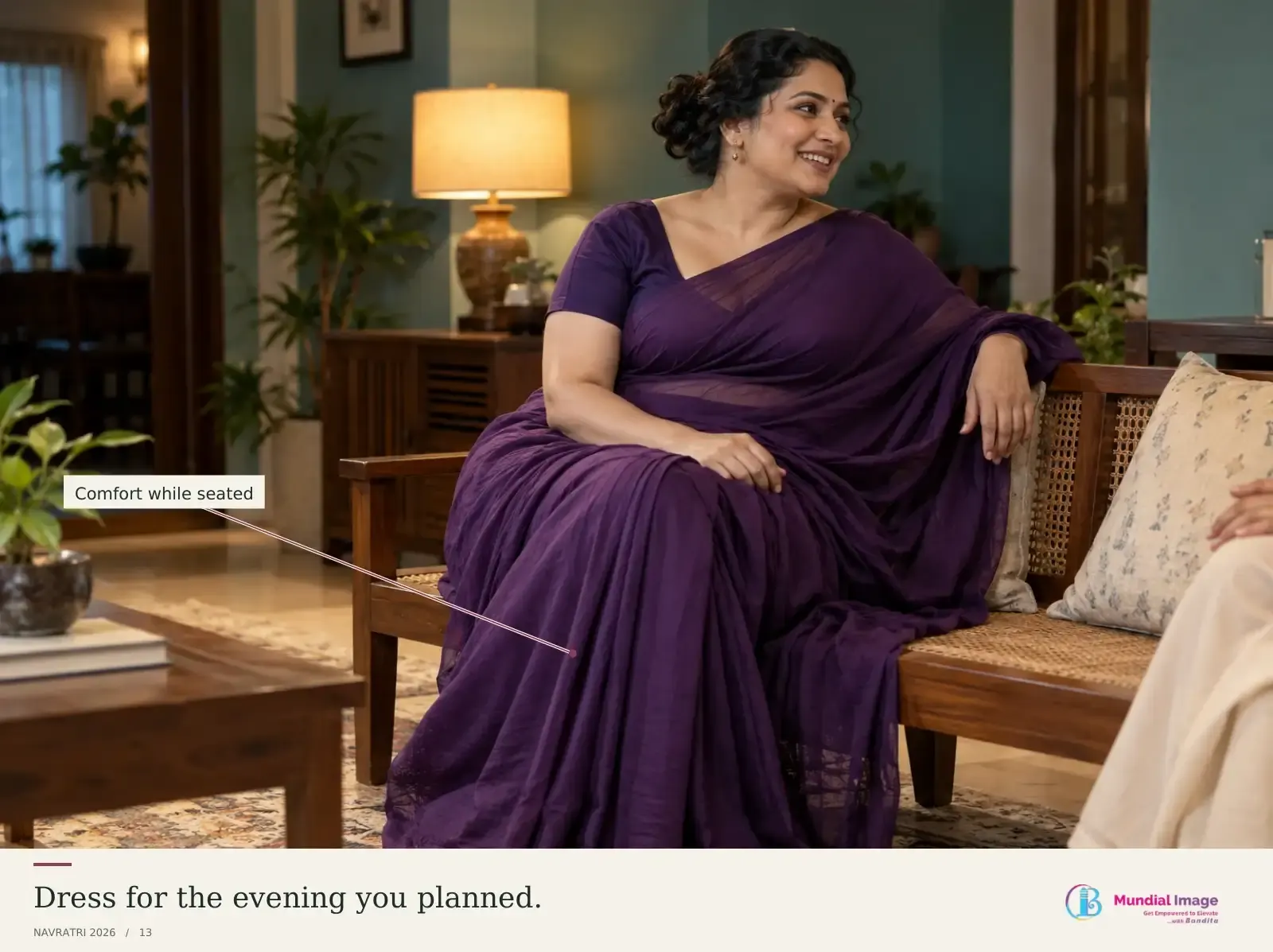
Day 8, purple: keep the richness where you want it
Purple velvet, purple cotton and purple silk have very different weights and surfaces. Pick the garment for the conditions rather than assuming a rich-looking fabric will be pleasant all evening.
A purple saree suits a family or social occasion with a blouse that supports the drape comfortably. A purple cotton co-ord or kurta with generous stride room is a contemporary alternative. At a Garba venue, confirm that the outfit meets the stated dress code before choosing it.
A purple kurta gives men a strong single-colour option. If the available piece is a heavily lined bandhgala, reserve it for a lower-movement occasion. For women's styling, a softly textured bun or a secure braid changes how much of the neckline remains visible. Put the earrings on before finishing the hair so the two do not compete for the same space.
Full sizePurple for a Family EveningDress for the evening you planned.
09Monday · 19 OctoberPeacock green
Pairs withCreamSoft pink
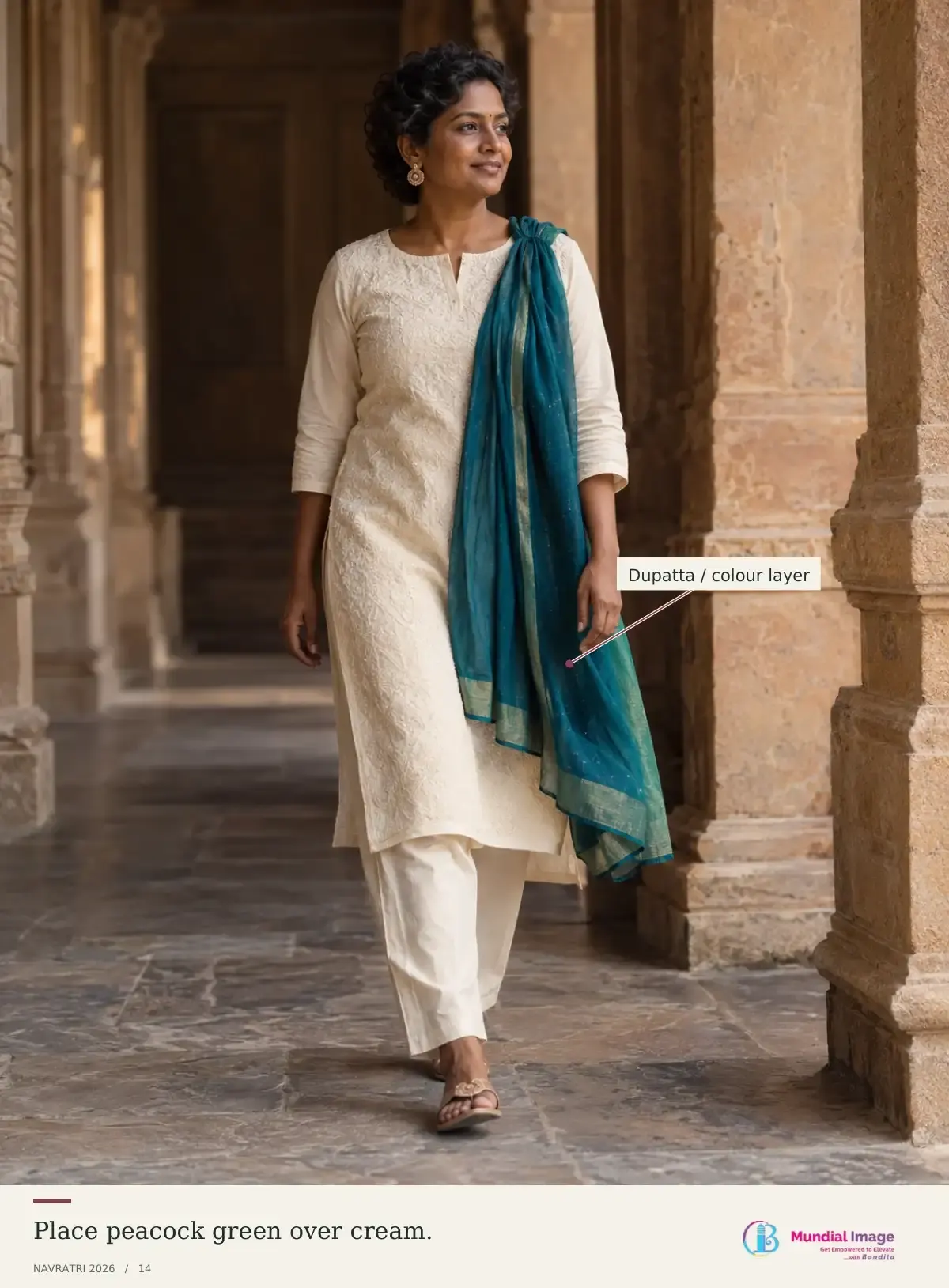
Day 9, peacock green: finish with a combination you trust
Peacock green sits in the blue-green family in this dressing calendar. Screens and textile dyes vary; do not buy a new outfit simply to match a digital swatch precisely.
Use a teal-green blouse with a familiar saree, or a peacock-green dupatta against cream. For a more pronounced evening look, a blue-green skirt can work with a solid top and a compact necklace. Let one contrasting element, perhaps an old pink blouse or a warm-metal earring, make the combination distinct.
Men can use a blue-green kurta with a bottom that has already passed the movement check. A stole can carry the shade at a seated gathering. After several nights of wear, inspect closures, jewellery backs and hems again. The most useful final-night outfit may be the one that is freshly cleaned, fully dry and already comfortable.
Full sizePeacock Green and CreamPlace peacock green over cream.
04Try it in motion
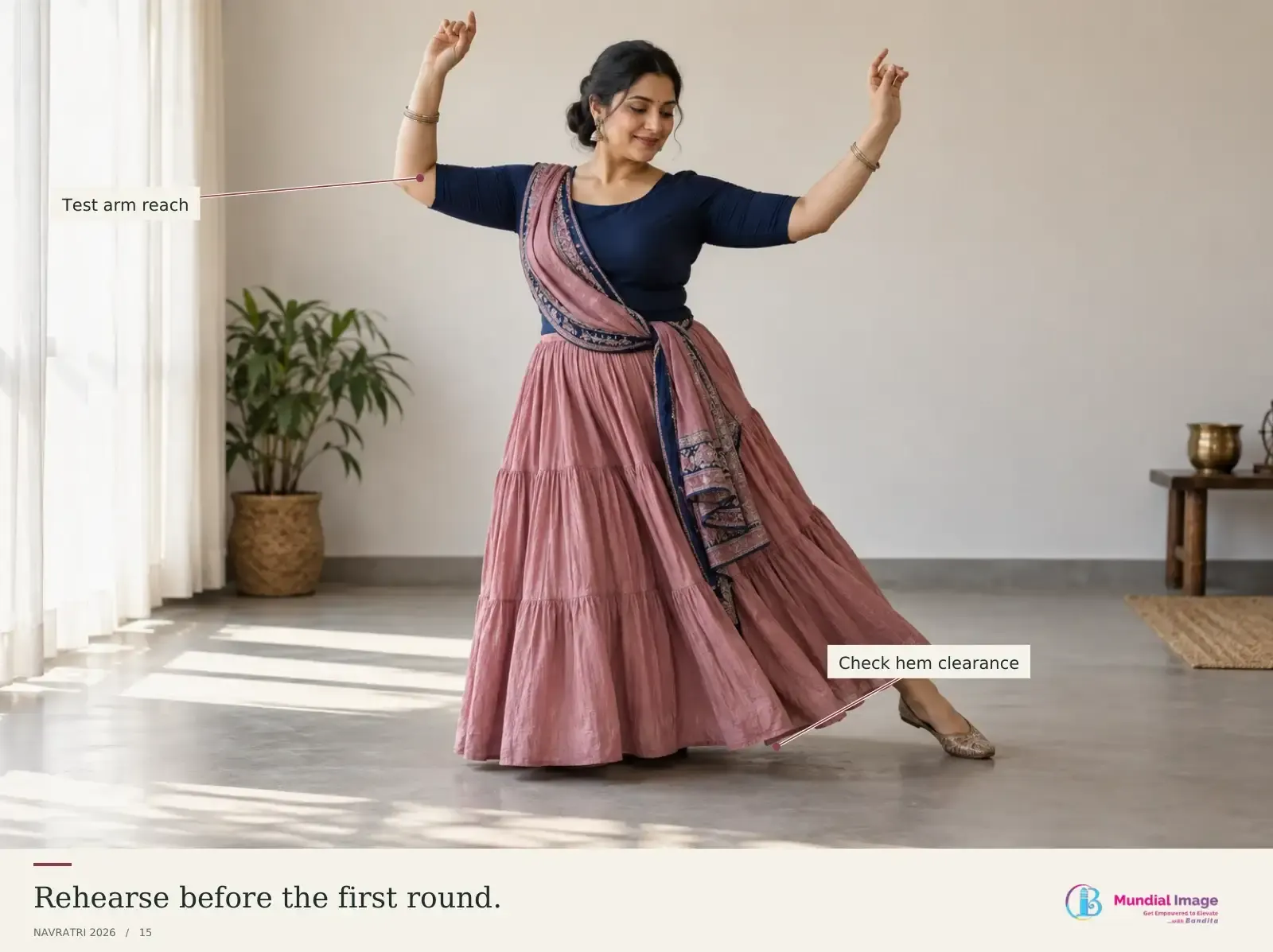
The Garba movement test: try the whole outfit before leaving
Run this check in the actual outfit, underlayers, jewellery and shoes. Use a clear space and stay within movements comfortable for you. This is a dressing diagnostic, not an exercise prescription or a guarantee against injury.
0 / 10
Tap each check as you pass it.
Change a failed detail. Retest.
A failed check needs a change and a retest. Do not average it away because the rest of the outfit looks good. Tailoring, a different drape, lighter jewellery or a simpler shoe can each solve a specific problem. Some garments belong at the puja or dinner instead.
Full sizeGarba Movement StudyRehearse before the first round.
05Keep green. Change the brief.
Garba, puja, office and social: one colour, four different briefs
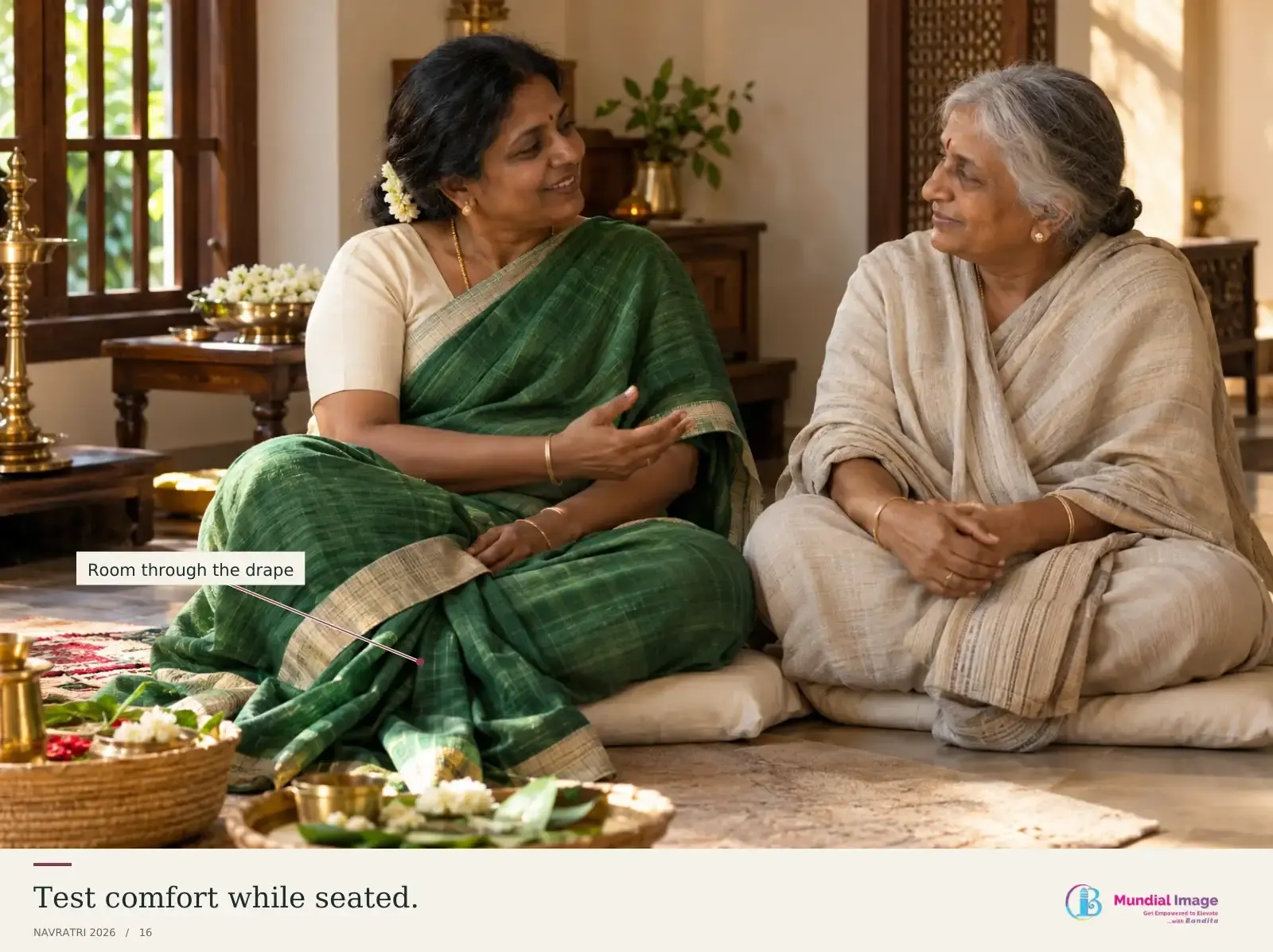
Consider green. Keep the colour and change the demands around it.
Garba
Women’s starting point
Green chaniya or roomy kurta set
Men’s starting point
Kediyu or kurta with easy-moving bottoms
Deciding detail
Secure drapes; rehearse turns
Puja
Women’s starting point
Green saree or salwar-kurta
Men’s starting point
Green kurta with comfortable pyjama
Deciding detail
Sitting, footwear removal and family custom
Office
Women’s starting point
Green blouse and trousers, or a simple kurta
Men’s starting point
Muted green shirt with tailored trousers
Deciding detail
Workplace policy and scheduled meetings
Family/social
Women’s starting point
Green saree, skirt-separate or co-ord
Men’s starting point
Green kurta with a textured jacket
Deciding detail
Hosting duties, travel and time seated
Examples, not universal dress codes. Confirm the actual invitation. The occasion decides the details.
A temple may have particular coverage or footwear expectations. An office may have a festival-day exception that does not apply to a client meeting. Ask about the actual event when the invitation is unclear.
Full sizeGreen at a Family PujaTest comfort while seated.Full sizeGreen in the OfficeKeep the office brief visible.
06Repeat what you own
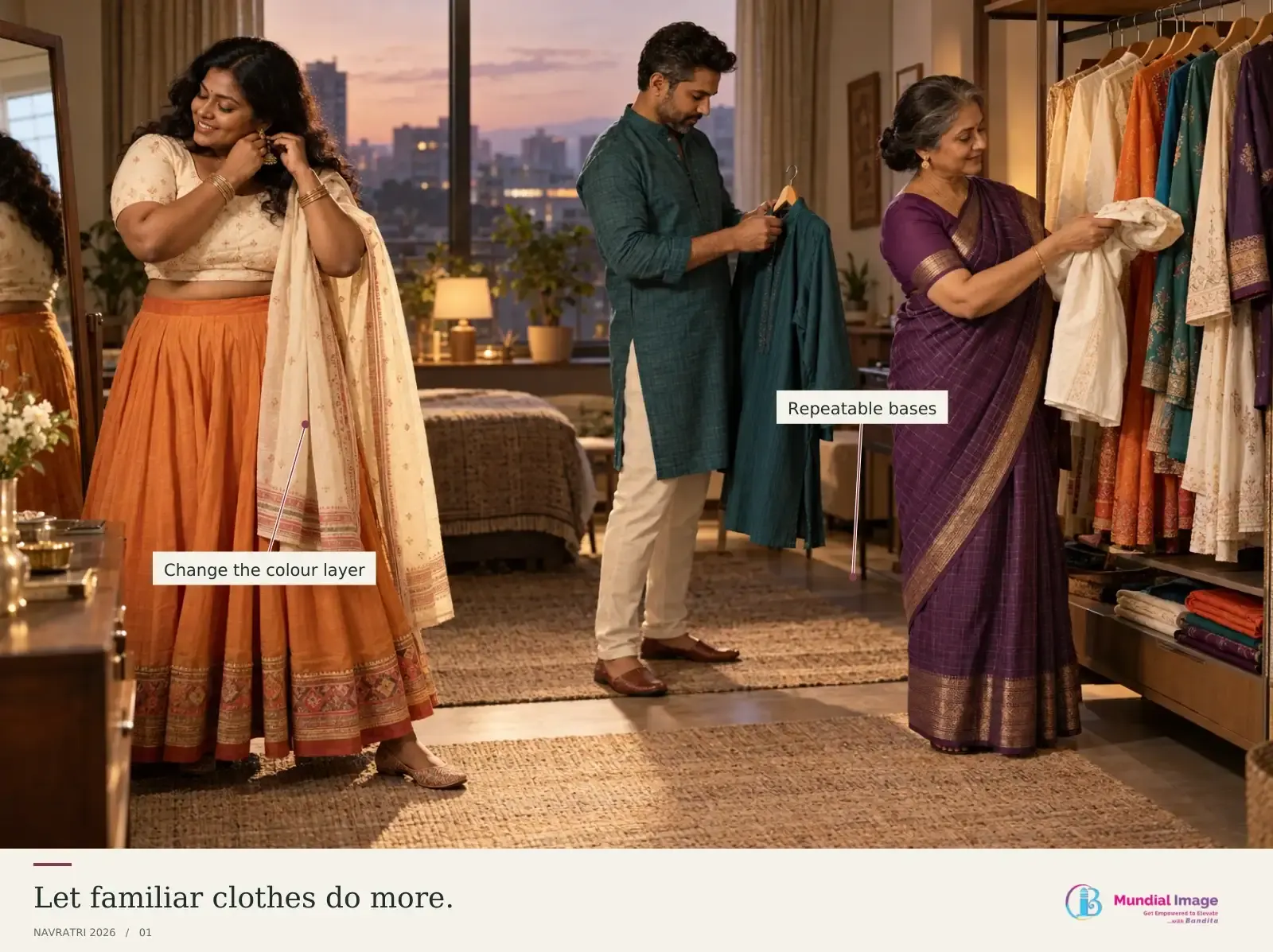
“I don't own nine Navratri outfits.” Plan the repeats visibly.
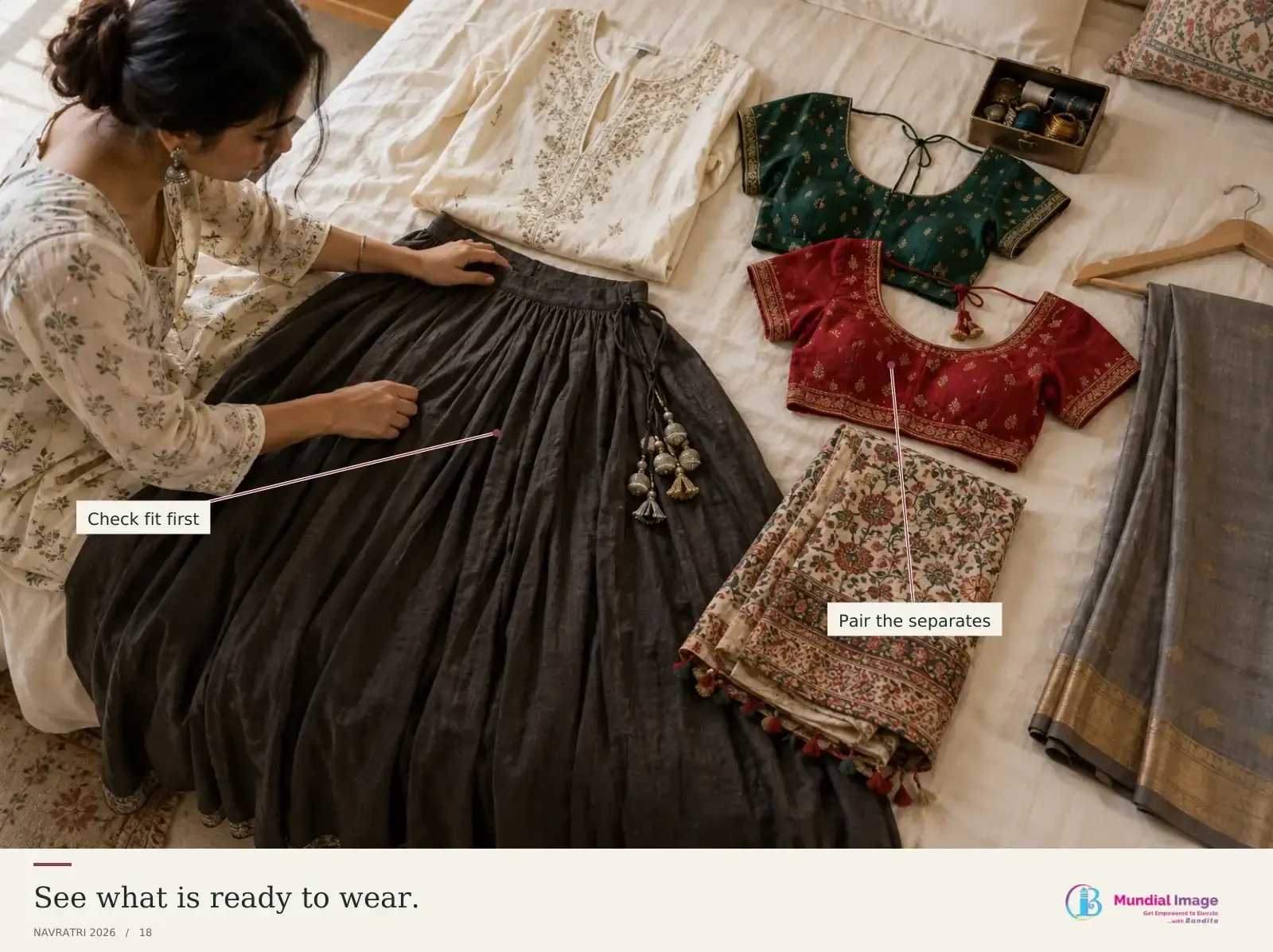
Lay out complete, wearable bases before counting colours. Separate what is clean and ready from what needs alteration, laundering or a borrowed blouse. A skirt that does not currently fasten is not yet an available outfit.
Build a repeat plan around cleaning time and activity. A blouse worn through a long dance night may need washing before its next appearance. Do not schedule it again the following morning without knowing whether it will dry. Keep a spare base for weather, spills or a change of plan.
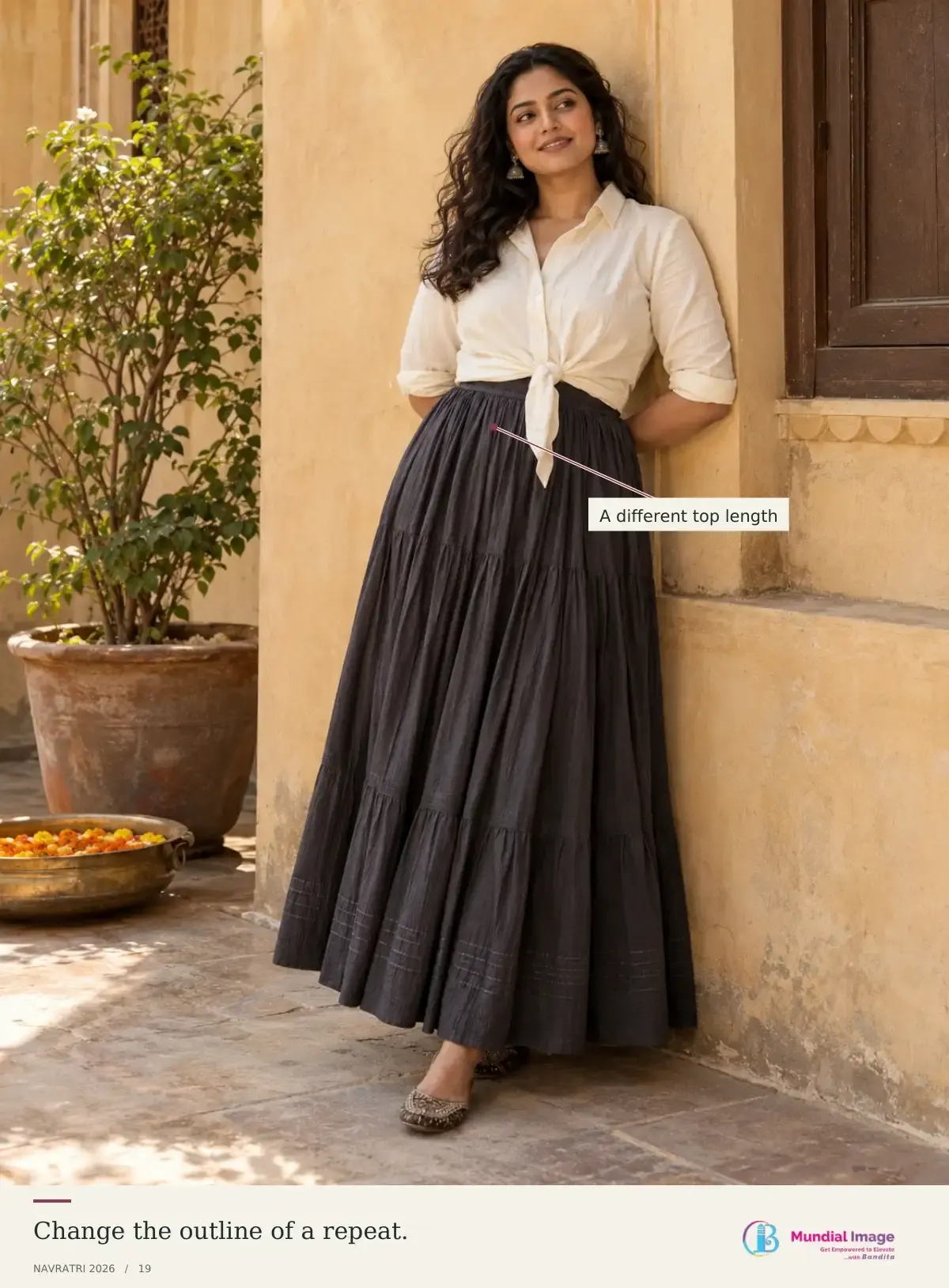
Full sizeWardrobe Before ShoppingSee what is ready to wear.Full sizeA Familiar Skirt, Another ProportionChange the outline of a repeat.
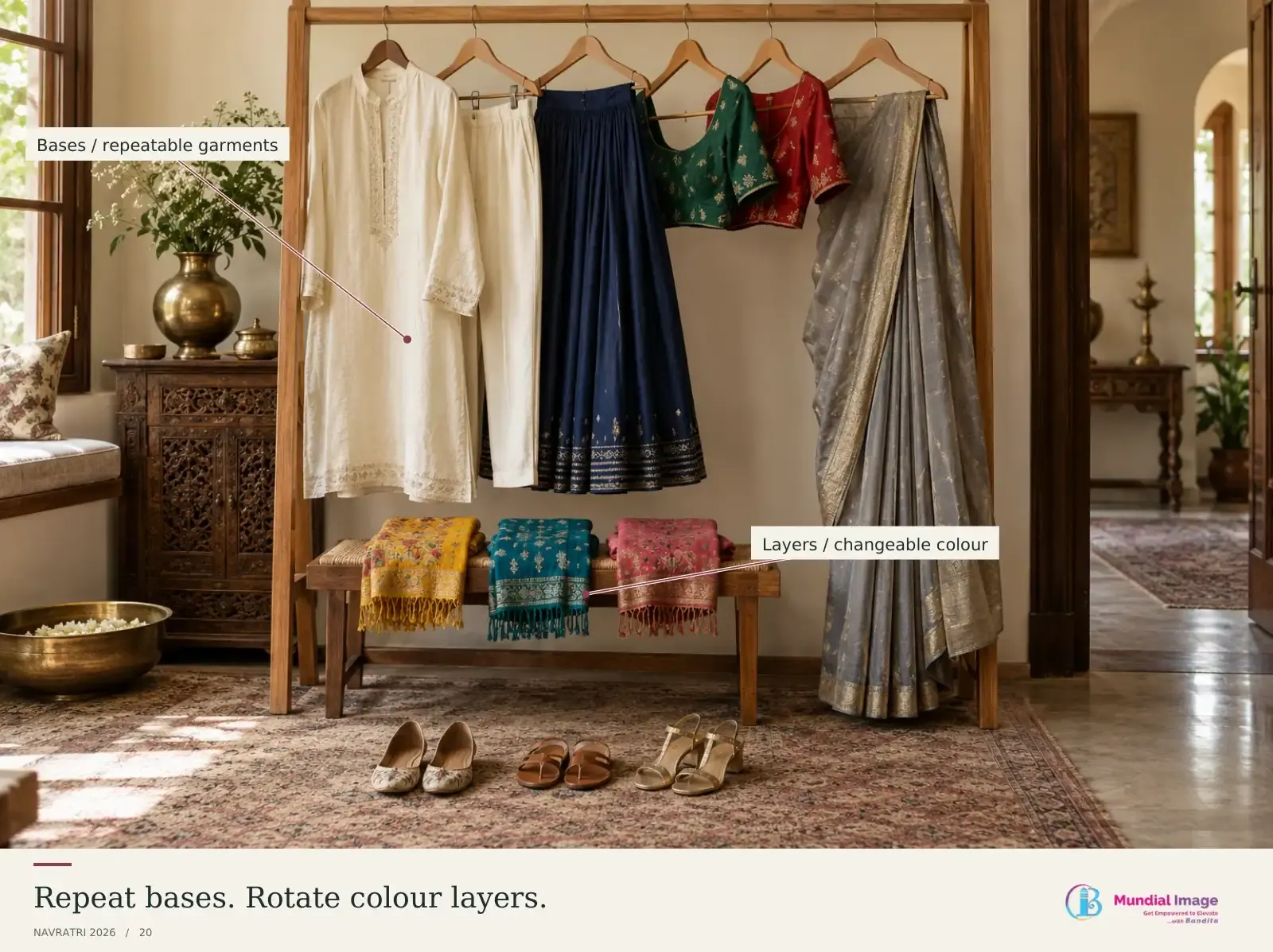
Then identify colour carriers already in the wardrobe: a printed dupatta with several usable colours, a blouse, a short jacket, earrings, a scarf or a saree border. Borrow only what fits and can be returned in the agreed condition. Rental can make sense for a one-off look, but check the fitting, deposit, cleaning terms and return time before committing.
Change more than jewellery when you want a repeat to look substantially different. A different top length, visible waistline, drape or outer layer changes the outline. A hair change alters the area around the face. These shifts are often more noticeable than adding another bangle.
The cream base has more appointments
One clean kurta and trouser set. Different occasion choices.
Cream kurtaCream trousers
Daytime
Cream base
Orange dupatta
Small earrings
Family evening
Cream base
Blue-green layer
Warm-metal detail
Social
Cream base
Purple short jacket
Clear neckline
Schedule laundering between wears.
Reuse before you buy
Do this with complete outfits in front of you.
OwnDoes an existing base fit and suit the event?
RestyleCan a different top, drape or layer solve it?
Borrow / rentWill it fit, arrive in time and meet return terms?
Buy if neededName the missing function before choosing the item.
Buy for a real wardrobe gap.
06The capsule
A practical Navratri capsule, with honest limits
For a women's example, begin with a cream kurta and trousers, one comfortable skirt, two tops that actually fit that skirt, and one familiar saree with its blouse. Add three existing colour layers if you have them: perhaps a red-orange printed dupatta, a blue-green scarf and a purple jacket. Small yellow or grey accessories can extend the options.
This is a sample inventory, not a claim that seven garments automatically supply nine colours. Write down what is missing. Borrow, substitute a nearby shade as an editorial choice, use a small accent or skip the colour theme. Buying is one option.
Repeat base
First use
Later use
Check before repeating
Cream kurta and trousers
Orange dupatta for a gathering
Blue-green layer for another evening
Freshness and drying time
Comfortable skirt
White top, secure red drape
Green blouse, compact earrings
Waistband and hem condition
Familiar saree
Existing matching blouse
Contrasting blouse already fitted
Sleeve comfort and pallu handling
Men's neutral kurta and bottom
Coloured waistcoat for dinner
Different kurta with the same clean bottom
Fit, laundering and venue rules
Full sizeThe Repeat-Wear CapsuleRepeat bases. Rotate colour layers.
Bases repeat. Layers carry variety.
A sample inventory. Use what you actually own.
Bases
Cream kurta + trousers
Comfortable skirt
Familiar saree + fitted blouse
Compatible tops
Two tops that fit the skirt
A blouse you can sit and reach in
Colour carriers
Existing dupatta, scarf or jacket
Small jewellery accent if useful
Repeat check
Clean? Dry? Fits today?
Suitable for this event?
This sample does not automatically cover nine colours. Add drying time and one spare base. Count clean outfits, not combinations.
07Five silhouettes
Choosing between chaniya choli, saree, kurta and separates
Fit the parts separately
Chaniya choli
Choose the skirt's weight with the complete lining and underlayers in place. Inspect the waistband and ties. A dramatic flare that catches other people or drags beneath your shoes needs adjustment. Judge blouse mobility separately.
Rehearse your own drape
Saree
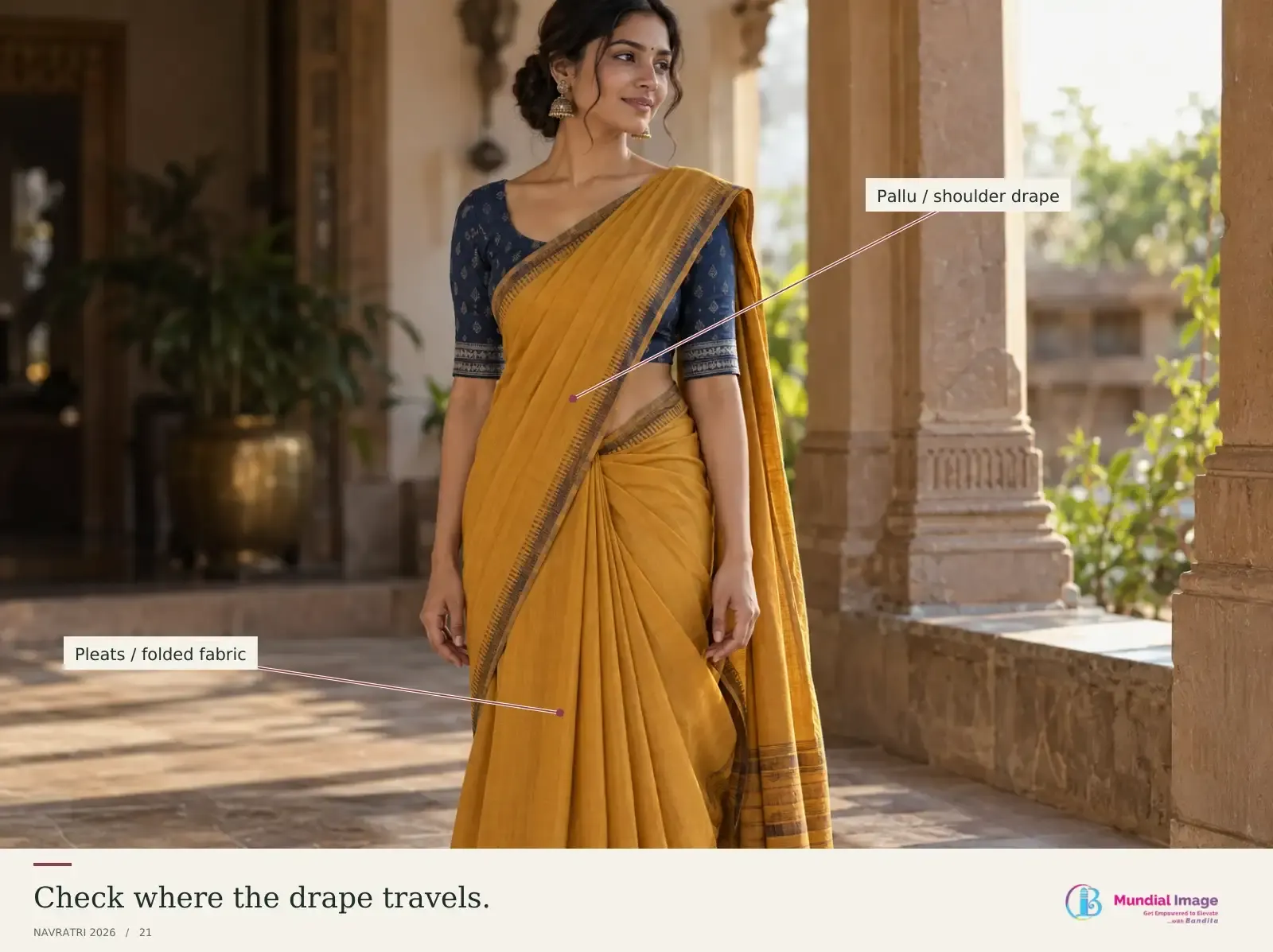
Use a drape you can manage confidently and practise in the actual footwear. Secure pleats and pallu using methods appropriate to the fabric; heavy pinning can damage a delicate weave. A pre-draped saree still needs checks for stride, closure placement and length. Familiarity helps more than a product label promising ease.
Look past the front view
Kurta set
Inspect side openings, armholes and the width of the bottoms. A long straight kurta over very narrow trousers may restrict the movement you want. A short kurta with roomy bottoms is an alternative where the invitation allows it.
Check the overlap
Skirt and separate top
Check the overlap while reaching and sitting. Choose the coverage you want, then verify that it stays that way in motion. A regular blouse or shirt can work if the proportions and fabric suit the skirt.
One layer for the detail
Jackets, co-ords and Indo-western
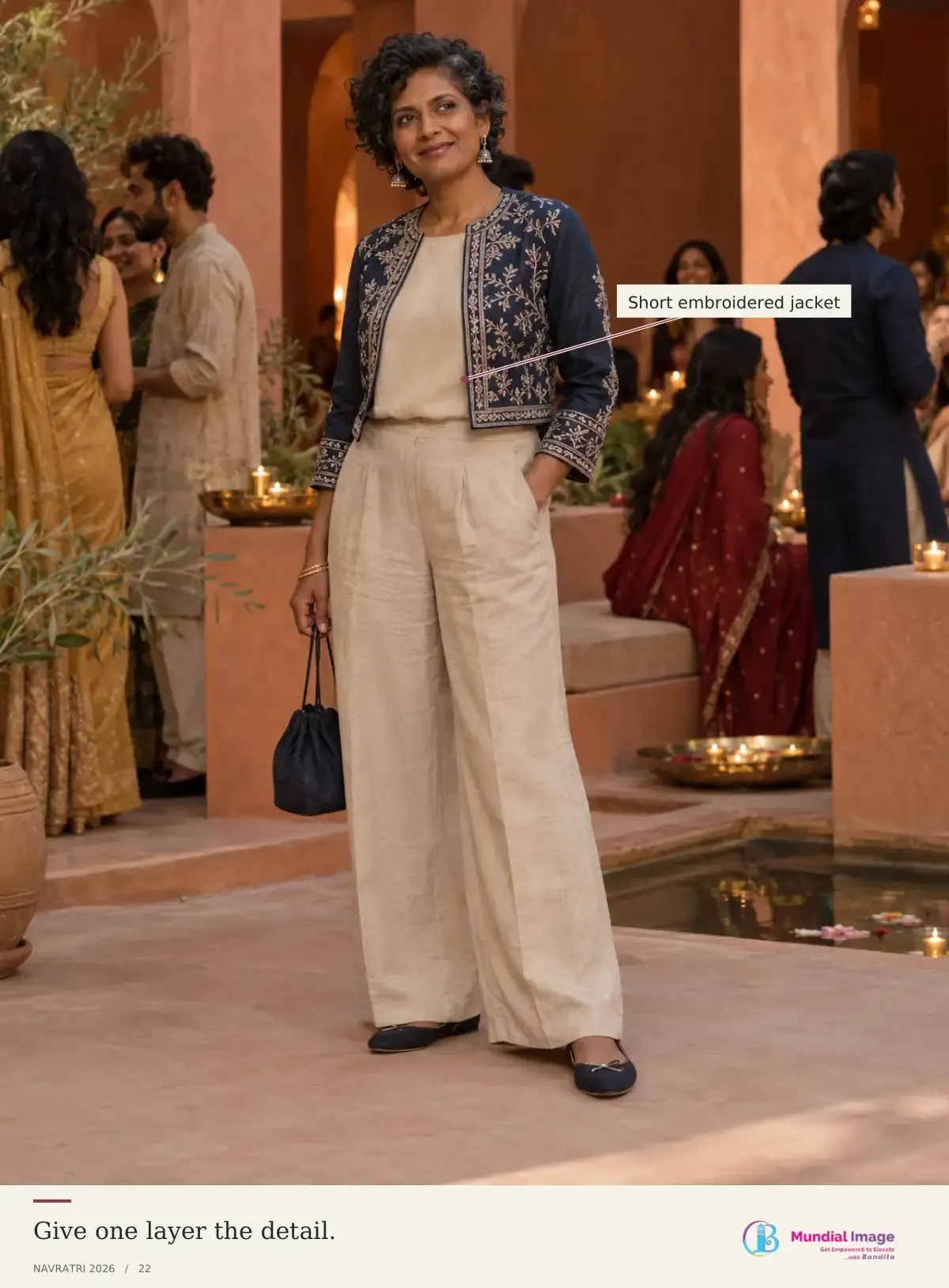
Start with one familiar silhouette. A short embroidered jacket over a plain base gives visual detail without requiring several new pieces. Test its lining and armholes. For a temple or a venue with a traditional-dress requirement, confirm the rules rather than assuming contemporary styling is accepted everywhere.
Full sizeSaree Pleats and PalluCheck where the drape travels.Full sizeContemporary Festive SeparatesGive one layer the detail.
08Men’s wardrobe
Men's Navratri outfits deserve more than a kurta colour list
KediyuKurta + bottomWaistcoat or kotiContemporary
A kediyu gives a traditional Gujarati Garba silhouette; UNESCO's visual documentation identifies it among men's Garba garments. Its flare, closures and accompanying bottoms should be fitted to the wearer and the intended movement. Avoid treating any flared kurta as an authenticated regional garment.[3]
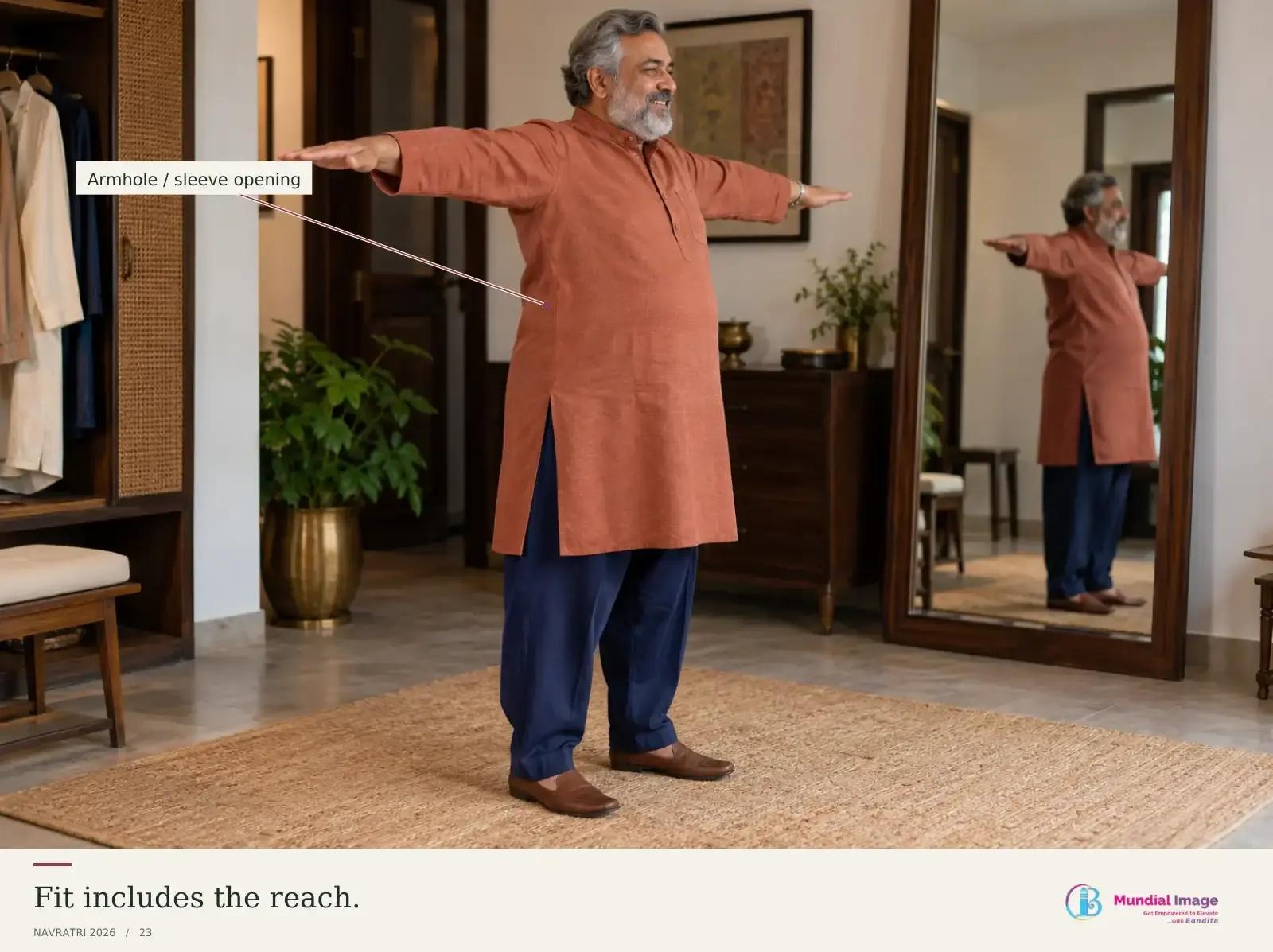
For a kurta-and-bottom combination, the useful questions are physical: can you lift your arms without pulling the placket, take a side step without strain and sit without the waist cutting in? Carry keys and a phone during the fitting. Overloaded side pockets can distort the line and swing during turns.
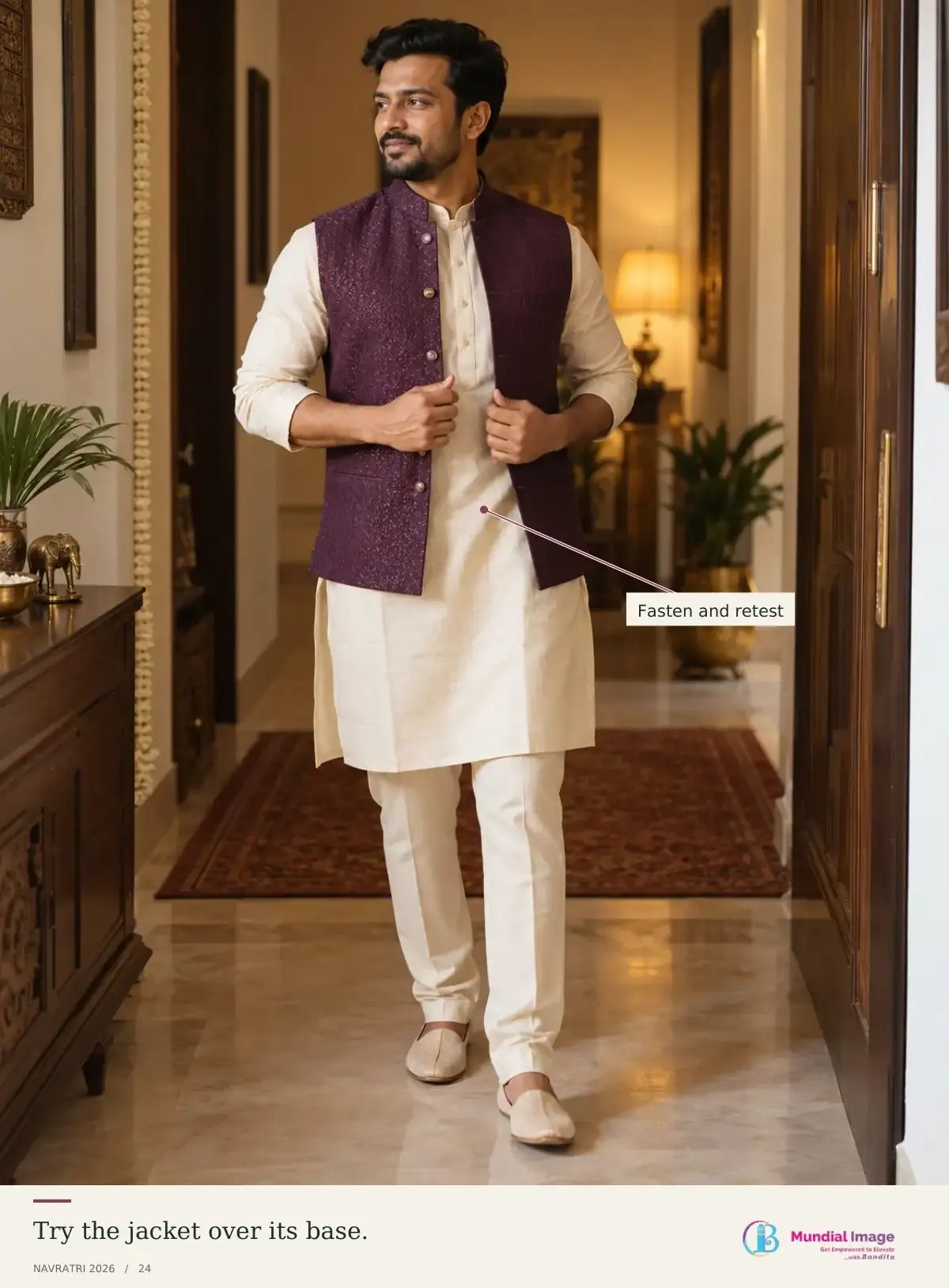
A waistcoat or koti adds detail quickly. Use it for a family gathering or as a removable layer when appropriate. Check whether you can fasten it comfortably over the actual kurta. Two fitted layers can become restrictive even when each feels fine alone.
Full sizeMen's Kurta Fit in MotionFit includes the reach.Full sizeA Removable Festive LayerTry the jacket over its base.
For a contemporary look, a plain shirt or short kurta with roomy trousers and a textile jacket can work at an informal event. Keep the garment lengths intentional: a jacket that ends at the same awkward point as a bulky untucked shirt may need a different base. Use a mirror from the side as well as the front.
Jewellery is optional. A compact pendant or a familiar kada can provide detail; a swinging chain or loose stole may interrupt movement. Secure headwear properly if it is part of your own dress practice or chosen look. Do not use ceremonial or religious elements as generic costume props.
For couples or friends, coordinate one shared colour or textile note if you enjoy it. Matching every garment is unnecessary. Each person still needs clothing suited to their activity and comfort.
09Jewellery
Jewellery: leave space for the neckline and the dance
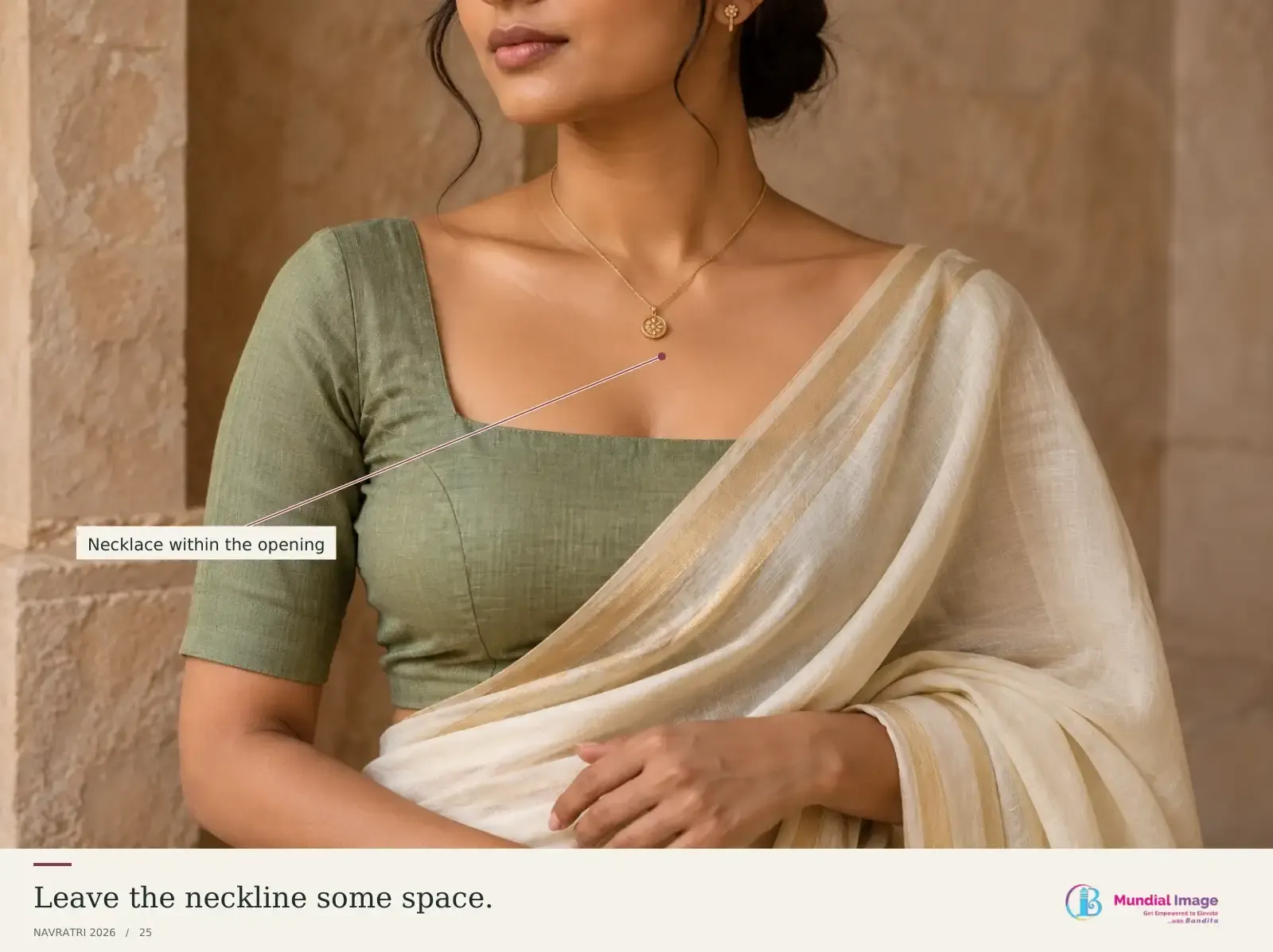
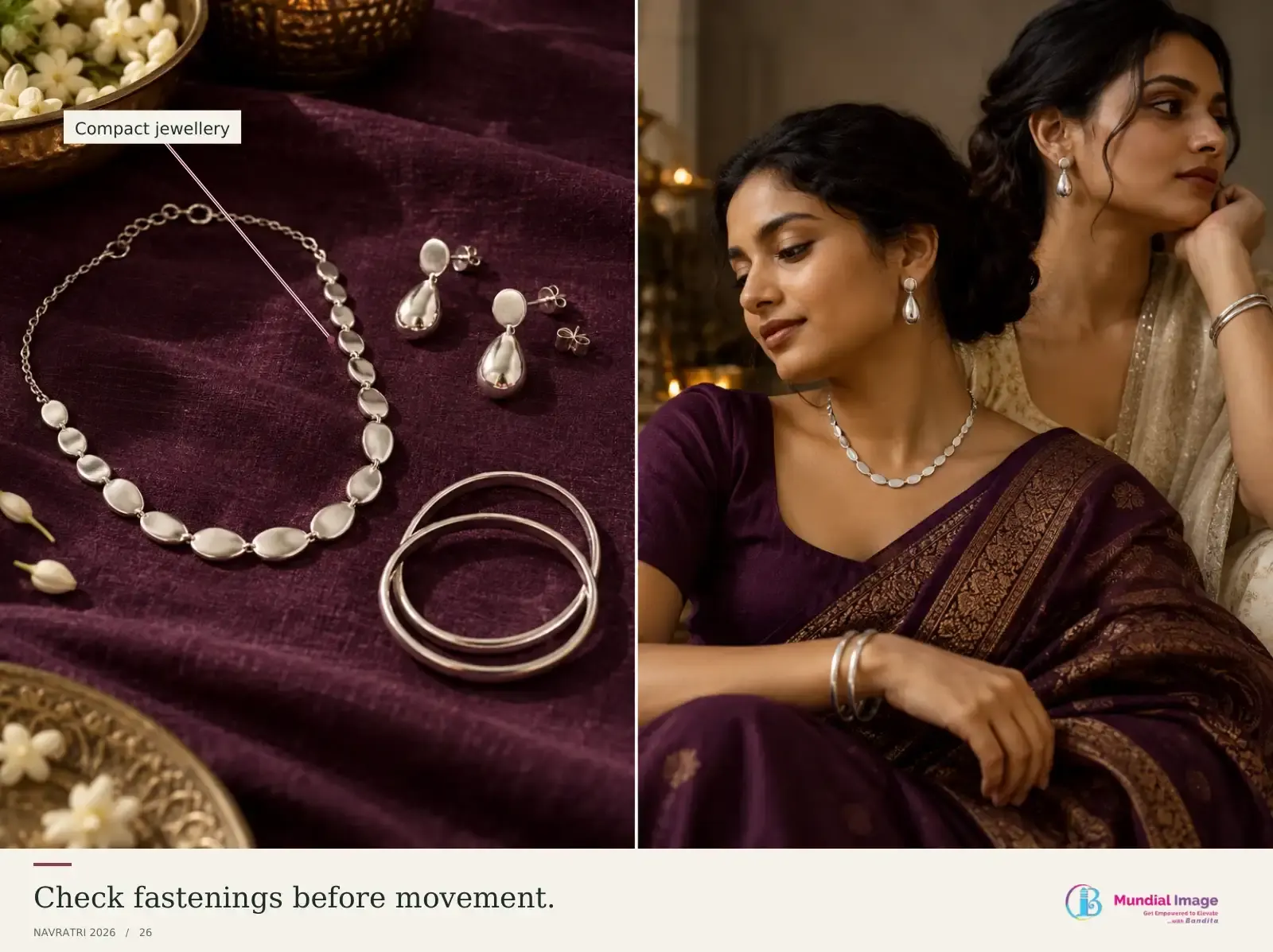
Start at the neckline. An embroidered high neck already contains detail; earrings may be enough. An open neckline can accommodate a compact necklace if it sits comfortably. A V-neck can take a pendant that rests within the opening, provided it does not swing or catch. These are composition choices, not rules for correcting a face or body.
Check the whole face area with hair in place. Large earrings, loose hair, a decorated neckline and an elaborate hair ornament occupy overlapping space. Remove or reposition one if you cannot see the detail you meant to emphasise.
For active Garba, weigh jewellery in movement. A piece can be light in the hand but catch on a sleeve. A short necklace can still press uncomfortably at the throat. Test secure backs, smooth edges and bangle clearance while clapping or holding dandiya sticks. Use pieces your skin already tolerates.
Full sizeNeckline and Necklace SpaceLeave the neckline some space.Full sizeJewellery Chosen for MovementCheck fastenings before movement.
Give the neckline some space
Composition choices, not body-correction rules.
High / detailed
Start with earrings. The neckline already holds detail.
Open / square
A compact necklace can sit within the opening.
V-neck
A pendant can follow the opening if it stays in place.
One-shoulder drape
Check earrings and pallu together before adding more.
Try jewellery with hair and drape in place. Nothing should press, snag or distract from movement. Check the whole face area.
Will it stay where you put it?
Match the accessory to the activity.
Piece
Seated event
Active Garba
Earrings
Balance with hair
Check backs + snagging
Necklace
Choose visual weight
Check swing + pressure
Bangles
Choose a stack
Check grip + clearance
Hair ornament
Arrange the finish
Check stability + edges
Stole / chain
Control loose ends
Remove if it interferes
No jewellery type is automatically dance-safe. Fit, edges, weight and fastenings vary. Test the piece, not its category.
10Hair and makeup
Navratri hair and makeup that work with the outfit
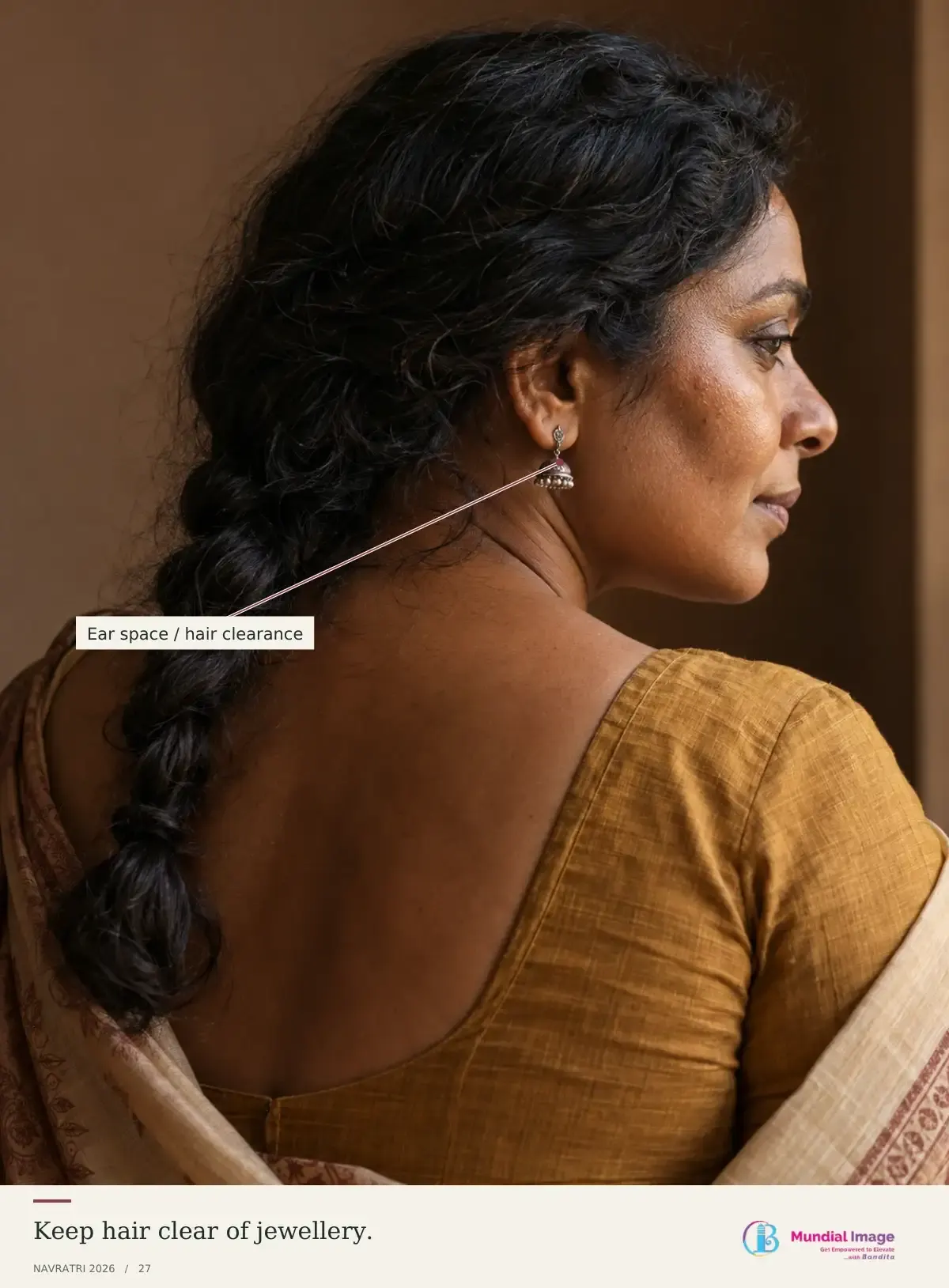
For dancing, choose a bun, braid, ponytail or short-hair arrangement that stays clear of the eyes and earrings. Test the fastening with head turns. Avoid an unfamiliar, uncomfortable hairstyle simply because it photographs well. For a seated family event, loose hair or a softer arrangement can give a different finish without changing the clothes.
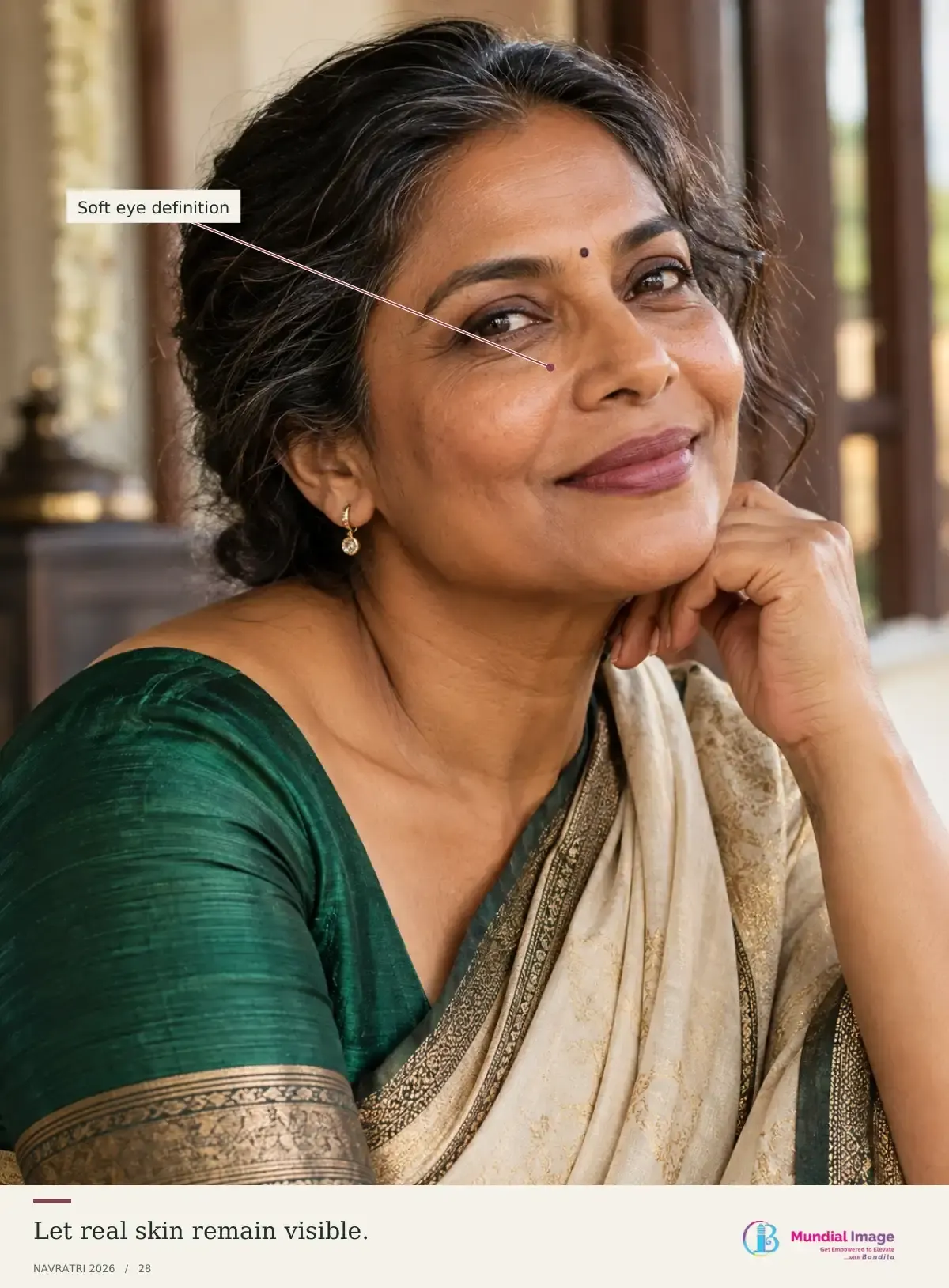
Makeup can repeat one colour or balance a richly coloured outfit with a quieter face. Put the complete look on under ordinary lighting. Strong stage lights and phone flash may make shimmer appear different from the dressing mirror. Use familiar products and carry only the touch-ups you expect to use. No product should be described as guaranteed sweat-proof for every wearer.
Full sizeHair Clear of the EarringsKeep hair clear of jewellery.Full sizeA Restrained Festive Makeup StudyLet real skin remain visible.
11Ground level
What footwear should you wear for Garba?
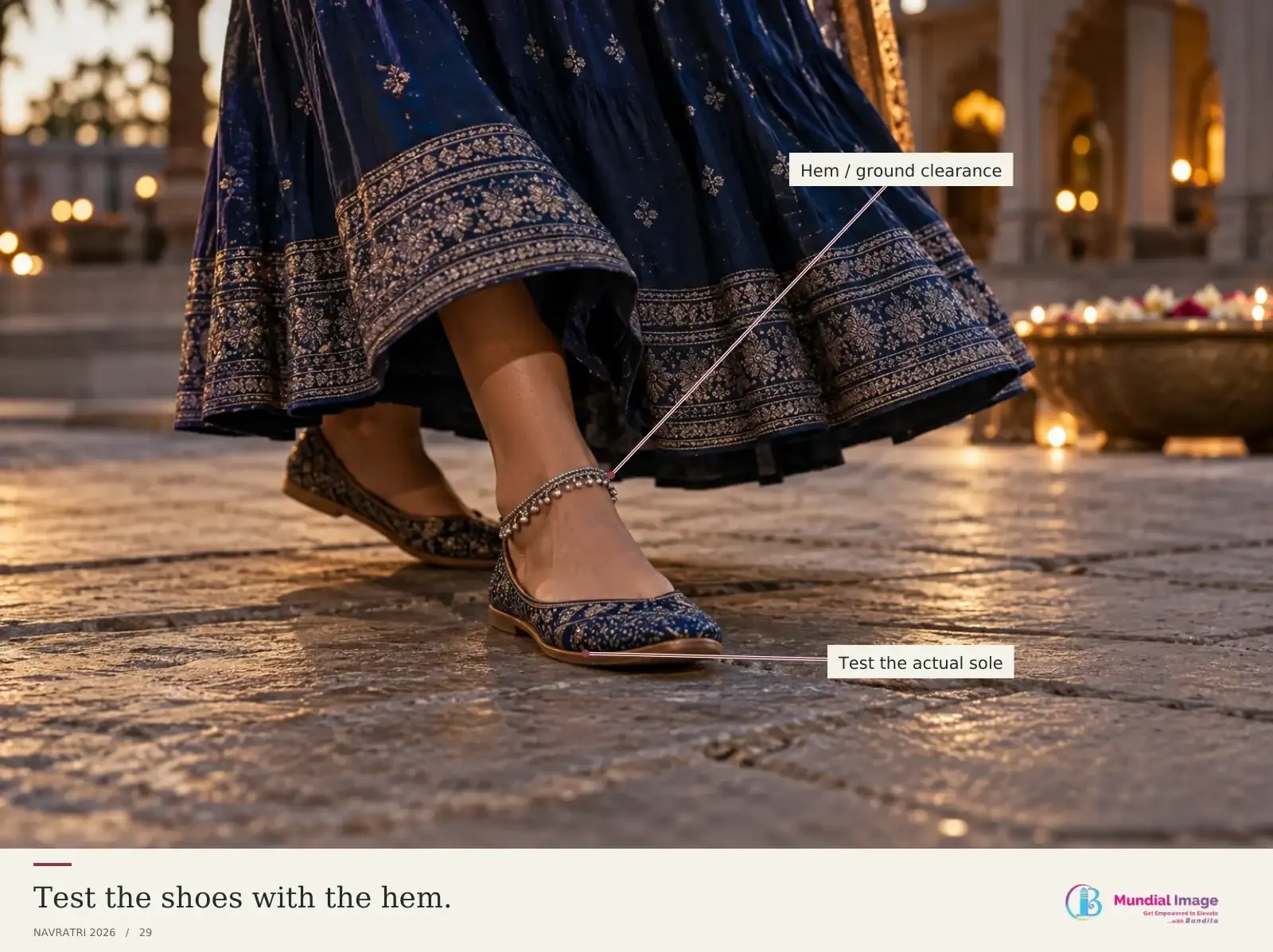
Choose footwear by fit, fastening and the surface, then consider its appearance. A jutti is not automatically comfortable; some have hard edges, little cushioning or a heel that slips. A sneaker is not automatically suitable either: a sole with too much grip can catch during a turn, and venue rules differ.
Try the actual pair with the finished hem length. Walk, stand and make controlled turns. Check whether the toes have room, the heel stays in place and straps rub. Familiar flats or secure low-profile shoes are starting options, not a universal prescription. Avoid making a long dance evening the first wear of a new pair.
Ask the organiser about footwear requirements. Where a ritual or venue requires shoes to be removed, plan for that transition and the actual ground conditions. Do not assume barefoot dancing is suitable on every surface.
Full sizeFootwear and the Garba SurfaceTest the shoes with the hem.
Choose the shoe for the surface
A shoe label cannot confirm comfort or grip.
VenueAre shoes allowed? What surface will you use?
FitHeel stays in place. Toes have room. No rubbing.
MovementWalk and make controlled turns on a comparable surface.
DecisionSlipping, catching or discomfort? Change the pair.
Follow organiser rules on footwear. Do not assume barefoot dancing is suitable on every surface. Recheck the hem with those shoes.
12Your direction
Quiet, heritage-rich or dramatic: choose a direction for this occasion
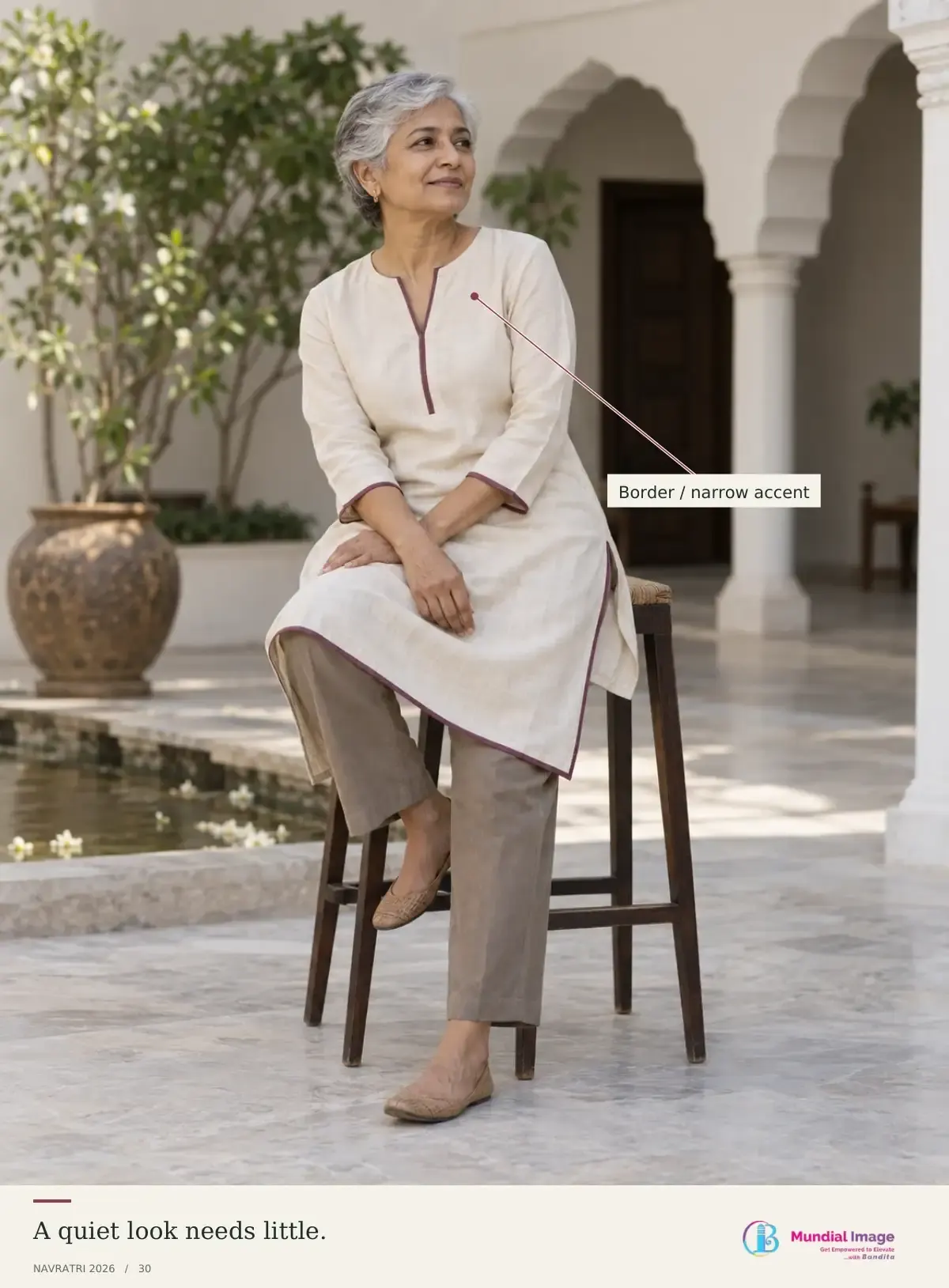
A quiet look might use a plain kurta, a narrow contrasting edge and small earrings. A classic look can rely on a familiar saree, a consistent metal finish and a neat drape. Heritage-rich dressing gives an identified textile or family piece space to be seen, with care for its condition and provenance.
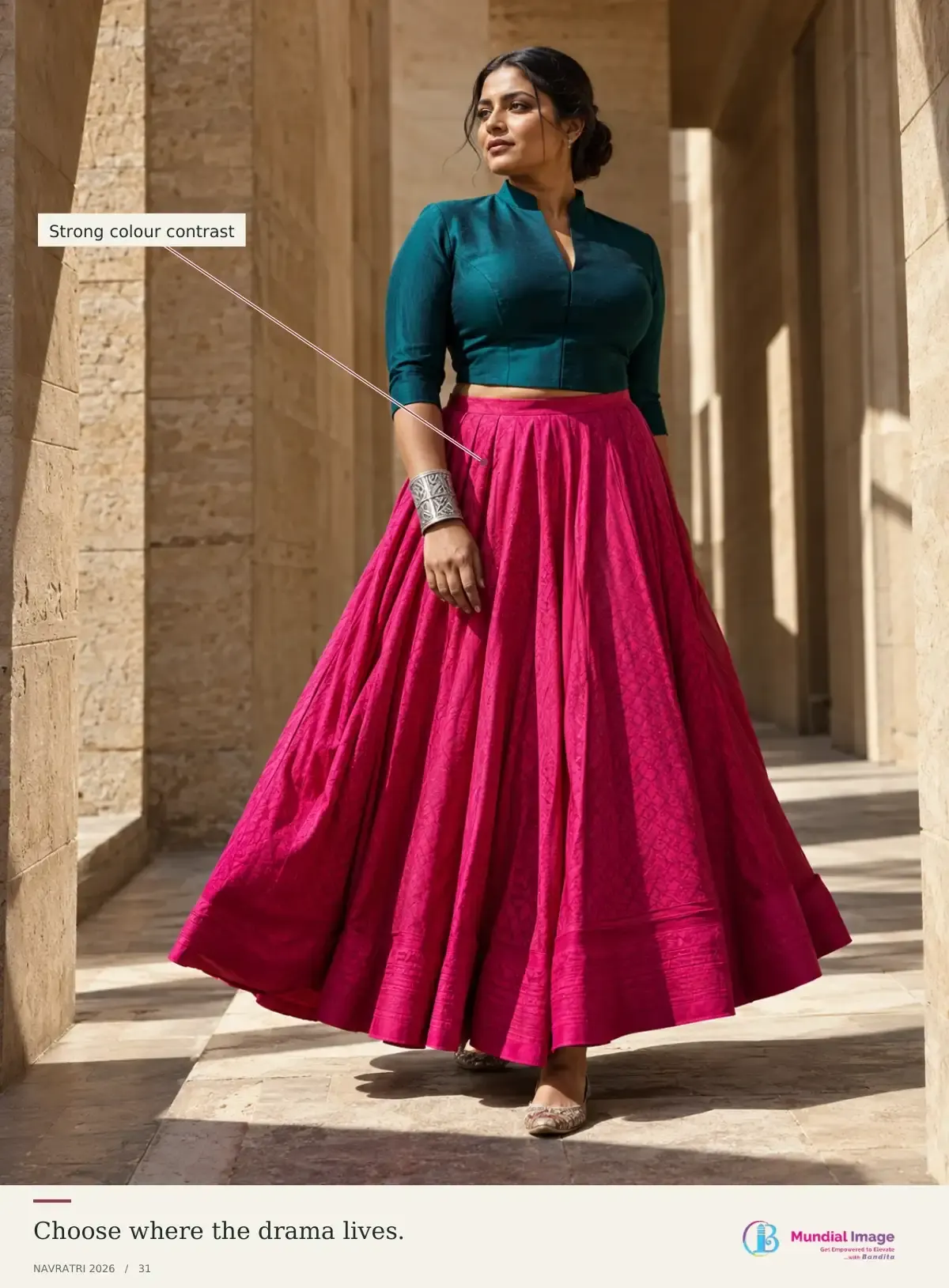
For a romantic direction, try a softer drape, floral detail or curved jewellery shapes. A creative look can combine an unexpected colour pair or restyle a shirt with a skirt. Dramatic dressing can concentrate on a sculptural silhouette or strong contrast. Contemporary styling may use a co-ord, tailored separate or abbreviated jacket.
These directions overlap. They describe a chosen outfit, not your personality. If the same clothing repeatedly feels unlike what you intended, the Signature Style Quiz offers a separate starting point for examining your preferences.
Full sizeA Quiet Festive LookA quiet look needs little.Full sizeColour and Silhouette with More PresenceChoose where the drama lives.
Where should the eye land?
Different directions. No better or worse end of the scale.
These are outfit directions, not personality diagnoses. Dramatic styling still needs the movement check. Choose your emphasis deliberately.
13Before the door closes
The small failures worth catching before the door closes
A borrowed blouse may fit around the waist but restrict your arms. A bag may be tiny yet swing into every turn. A heavy necklace can pull a light blouse out of position. A new shoe can change the hem clearance of a skirt you have already tested.
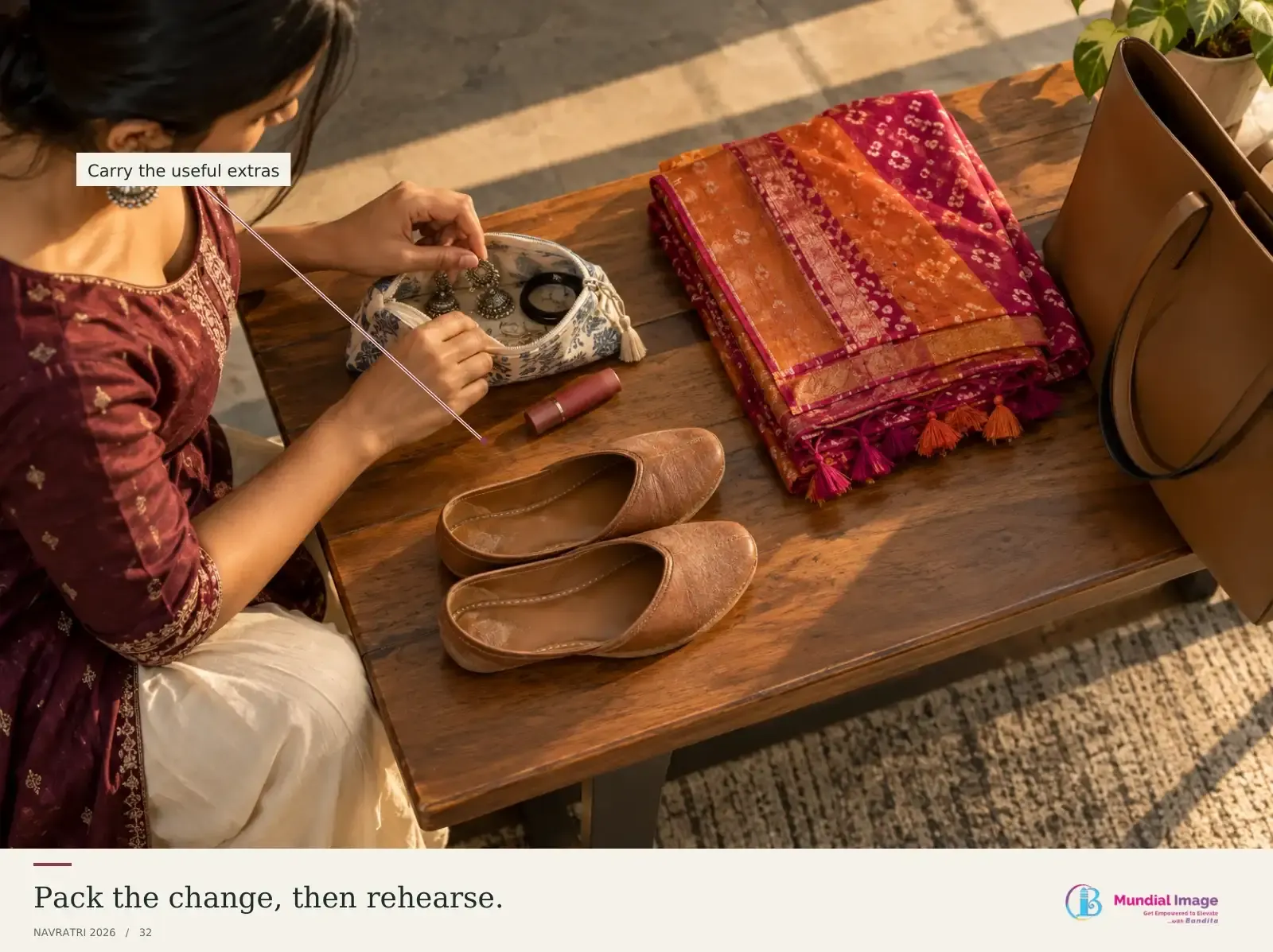
For an office-to-Garba day, pack the actual change kit: the evening layer, secure jewellery, a hair tie, familiar touch-up products and tested shoes if needed. Decide where the work bag will stay. If the base is uncomfortable after work, change it; accessories cannot solve that.
At the end of each night, separate clothes needing care, inspect anything borrowed and prepare the next outfit only after checking it is dry and wearable. Photograph combinations you liked for future use. The record is more useful than remembering that you once owned something in yellow.
Full sizeThe Evening Change KitPack the change, then rehearse.
Pack the change you will actually use
A clear place for the work bag matters too.
At work
Simple base
Compact jewellery
Work-appropriate shoes
Normal work bag
After work
Fresh top if needed
One colour layer
Secure jewellery + hair
Tested shoes; store the tote
Workplace policy comes first. Retest the complete evening outfit. A tired base may need changing.
Prepare for the next wear
An outfit is available only when it is ready.
Before the weekConfirm events, colours and dress requirements.
Try everythingFit the actual blouse, bottom and footwear.
Plan the gapsAllow cleaning and drying between repeats.
Before leavingCheck closures, jewellery backs and bag swing.
After each nightSeparate care items. Air or clean as required.
Before repeatingCheck it is clean, fully dry and still comfortable.
Follow garment care labels. Delicate and borrowed pieces may need different care. Leave a spare base in the plan.
Does the outfit work as a whole?
One unresolved practical problem is enough to change it. Tap each one as you answer it.
0 / 5
Five checks. Usually under a minute.
Fix the one thing needing attention.
14Before you ask
Navratri outfit FAQs
Still deciding? Start with the colour calendar, then run the movement test in the outfit you already like.
Do I have to wear the Navratri colour of the day?
Follow the customs of your household, temple or event. The day-wise colour sequence is a popular practice, especially in Gujarat and Maharashtra, rather than a universal requirement. A small accent is an editorial styling option when you want to participate without a complete colour-matched outfit.[1]
What can I wear to Garba if I do not have a chaniya choli?
Try a comfortable kurta set, a long skirt with a secure top, or a familiar saree drape. Confirm the venue's dress code, then test stride, arm movement, hem clearance and fastenings. A contemporary co-ord can work at some events, but acceptance should not be assumed everywhere.
Can I wear a saree for Garba?
Yes, if the venue permits it and the drape works for your movement. Rehearse in the exact blouse, underlayers and shoes. Change anything that trails, restricts your step or repeatedly slips. An outfit comfortable for a seated puja may need adjustment before dancing.
Can men wear jeans for Garba?
Check the event rules first. At an informal celebration, a kurta and flexible jeans may be accepted. Test movement and heat rather than relying on the word “stretch”. Roomier traditional bottoms or trousers can be a better choice for the individual outfit.
How can I repeat outfits across Navratri?
Repeat a clean base and change the top, drape, colour layer or silhouette. Plan laundering and drying between wears. Borrow an accent if useful, and keep a spare outfit for delays. Repeating a garment does not require concealing that you have worn it before.
What should I wear to an office Navratri celebration?
Use the day's colour within your workplace dress code: a kurta, saree, shirt or blouse with appropriate bottoms. Consider meetings and commute as well as the celebration. For more workwear context, see the Executive Presence Blueprint.
Do I need jewellery, a bindi or matching makeup?
No single styling element is compulsory across all celebrations. Follow your own practice and the event's expectations. Choose jewellery and makeup you want to wear, and check that accessories do not interfere with movement or comfort.
How is green different from peacock green in this guide?
Green is listed for 16 October; peacock green is listed for 19 October. Here, peacock green is styled as a blue-green shade. The swatches and outfit shades are visual interpretations, not exact textile standards or religious specifications.[1]
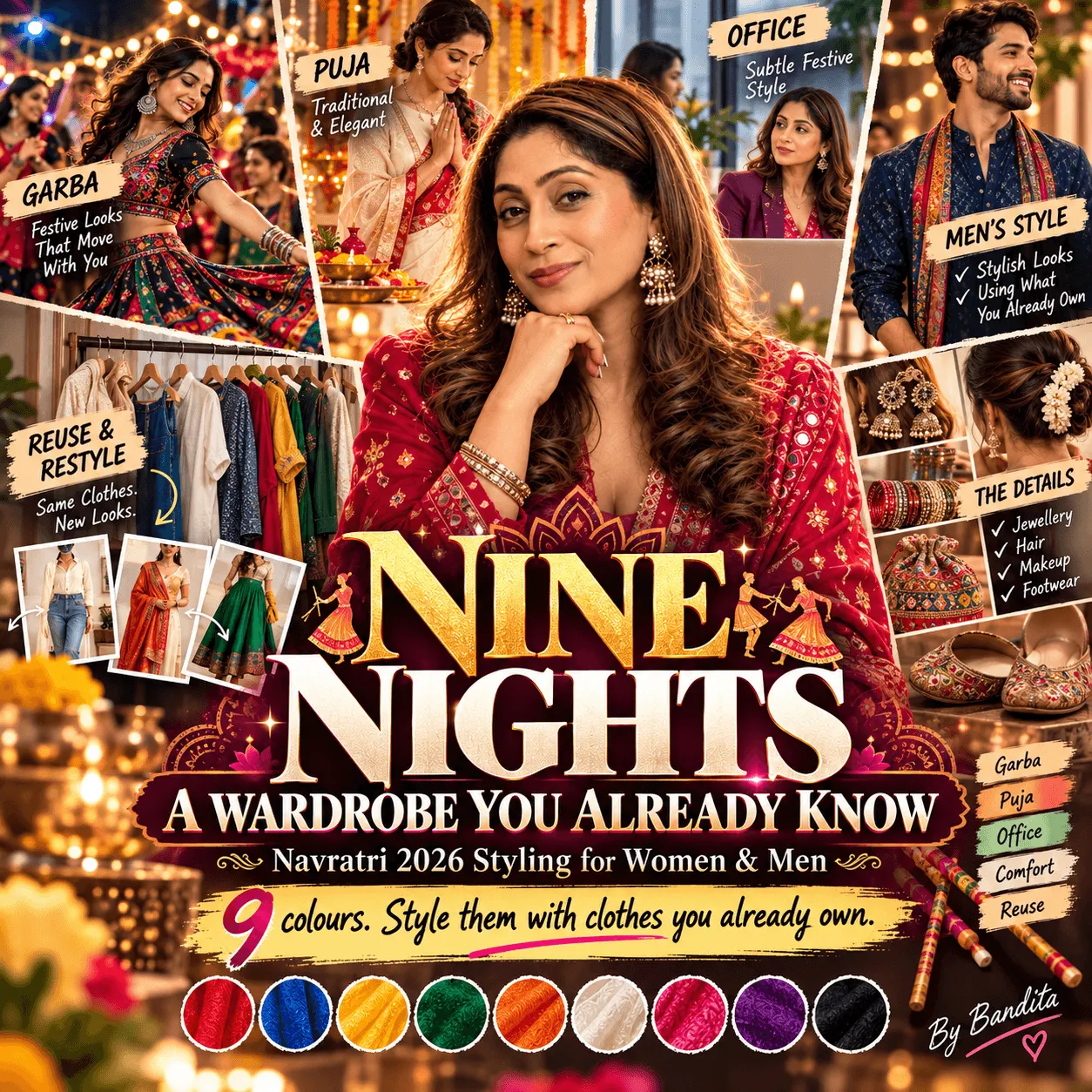
Full sizeNavratri 2026 Style GuideNavratri 2026. A Mundial Image guide.
Drik Panchang, Navratri calendar, checked 4 October 2026. Use the reader's location for ritual timings. This article does not prescribe muhurats.
UNESCO, Garba of Gujarat, and its accompanying photographic documentation, checked 4 October 2026. Source for the dance's devotional setting and regional garment context.
Styling formulas and checklists are original Mundial Image editorial recommendations, not measured performance findings. Photographic illustrations use fictional AI-generated subjects; they are not photographs of customers, endorsements or products offered for sale.